
Mt John Summit Stargazing
NZD 239 adult, per person, child NZD 239. Operator's own price
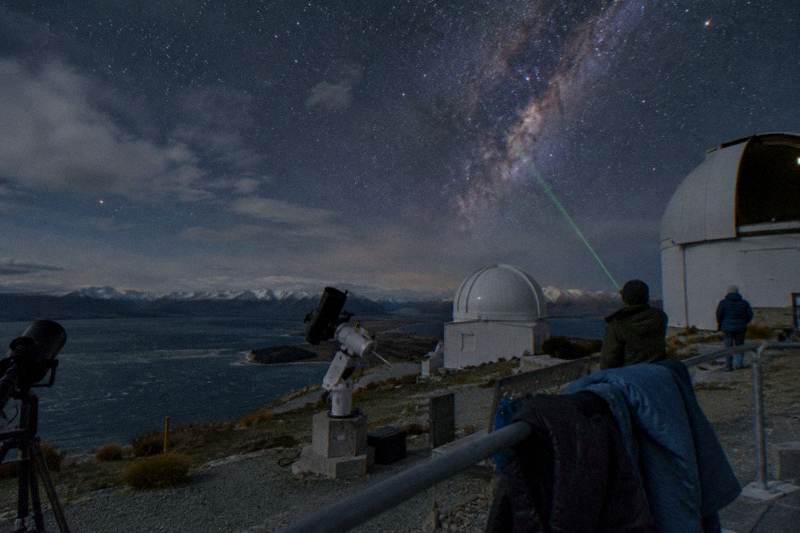
The only tour that puts you beside working research telescopes on the summit at 1,029 metres, inside a private dome.
Check availability
Stargaze from the summit domes of Mt John, then soak under the Tekapo hot pools. The strip beside this guide places each venue with the operator's adult price.
NZD 239 adult, per person, child NZD 239. Operator's own price
The only tour that puts you beside working research telescopes on the summit at 1,029 metres, inside a private dome.
Check availabilityNZD 139 adult, per person, child NZD 99. Operator's own price
Sheltered craters and a lower minimum age of 5 make this the family-friendly Dark Sky Project night.
Check availabilityNZD 59 adult, per person, child NZD 39. Operator's own price
A 45-minute daytime indoor tour that runs whatever the sky is doing, with no minimum age.
Check availabilityNZD 179 adult, per person, child NZD 115. Operator's own price
Pairs guided telescope viewing with a hot pool soak, with robes, towels and poncho coats supplied.
Check availabilityThe four cards above cover the experiences visitors book most often. Two are Dark Sky Project products: the Summit Experience, with a listing rating of 4.6 from 352 reviews, and the Crater Experience at Cowan's Private Observatory, rated 4.6 from 93 reviews. The indoor Dark Sky Experience carries 4.6 from 54 reviews, and the Hot Pools And Stargazing night from Tekapo Springs has no printable rating on its listing, so nothing is claimed for it here.
What separates them is the venue. The Summit Experience takes a 15-minute bus to the University of Canterbury Mt John Observatory and puts telescopes up to 16 inch inside a private dome; the operator lists it at NZD 239 for adults and children alike, minimum age 10. The Crater Experience uses 14 inch telescopes in purpose-built observation craters five minutes from the base, from NZD 139 adult and NZD 99 child, ages 5 and up. The Dark Sky Experience is a 45-minute indoor daytime show with no stargazing, from NZD 59.
The fourth card is the outlier: a 90-minute night that pairs guided telescope viewing with an exclusive hot pool at 37.5 to 38.5 °C, from NZD 179. Check availability on any card to see live dates and the current listing price before comparing further.
Direct operator prices climb in five steps from an indoor show to the summit dome. The Dark Sky Experience starts at NZD 59 adult and NZD 39 child, with a family pass for two adults and two children at NZD 157. One step up sits Scope at the Stars, a Tekapo Springs product shown here for price context: NZD 129 adult, NZD 84 child, family NZD 359.
The Crater Experience follows at NZD 139 and NZD 99, family NZD 377. Soak in the Stars costs NZD 179 adult, NZD 115 child, family NZD 499. The Summit Experience tops the ladder at NZD 239 flat, the same figure for adult and child, with no family pass stated.
| Adult (NZD) | Child (NZD) | Family Pass (NZD) | Child Ages | |
|---|---|---|---|---|
| Dark Sky Experience (Indoor) | 59 | 39 | 157 | Under 5 free with an adult ticket |
| Scope At The Stars (Tekapo Springs) | 129 | 84 | 359 | Minimum age 6 |
| Crater Experience | 139 | 99 | 377 | Child price covers ages 5 to 17 |
| Soak In The Stars (Tekapo Springs) | 179 | 115 | 499 | Minimum age 10 |
| Summit Experience | 239 | 239 | Not stated | Same price for every age, minimum age 10 |
Run the arithmetic for a family of two adults and two children and the gaps widen fast. Four Summit tickets come to 4 x 239, or NZD 956 in total. The Crater family pass at NZD 377 undercuts that by NZD 579, and the Soak in the Stars family pass at NZD 499 sits NZD 457 below the Summit figure. Even four Dark Sky Experience tickets bought separately, 59 + 59 + 39 + 39, total NZD 196, less than a single Summit seat.
The table above prints these side by side with child age rules. All figures are the operators' own direct-booking prices, and each Check availability button shows the live date you are actually paying for.
The Dark Sky Project prices on this page are the operator's own direct-booking figures, valid to 30 September 2027. Booking platforms set their own live prices, which differ from these and from each other, and those figures are not printed here. The booking button always shows the price you would actually pay for your date.
Three age rules shape the ladder. The Summit Experience charges children the full NZD 239 adult price and sets a minimum age of 10. The Crater child price of NZD 99 covers ages 5 to 17, making it the cheaper option for a 10 to 17 year old by NZD 140 per seat. The Dark Sky Experience takes children under 5 free with an adult ticket and does not publish a minimum age, with content suited to about age 7 and up.
Before paying, check the cancellation terms that apply to your booking. Direct Dark Sky Project bookings can be cancelled up to 24 hours before for a full refund; inside 24 hours the full price is charged. Groups of 10 or more face stricter rules, with no refund inside 72 hours on Summit and Crater, or 48 hours on the Dark Sky Experience. Late check-in is not refunded. Bookings made through a platform follow that platform's terms rather than the operator's, so confirm which terms govern your ticket before you commit.
A starting shortlist of the best-reviewed tours sits below. Tap an answer to rebuild it.
1 hour 45 minutes · Free cancellation
75 minutes including transport · Free cancellation
45 minutes · Free cancellation
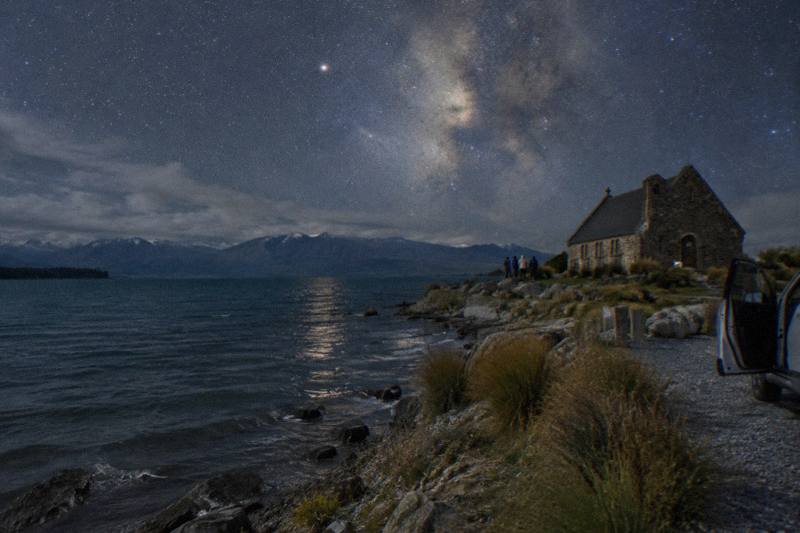
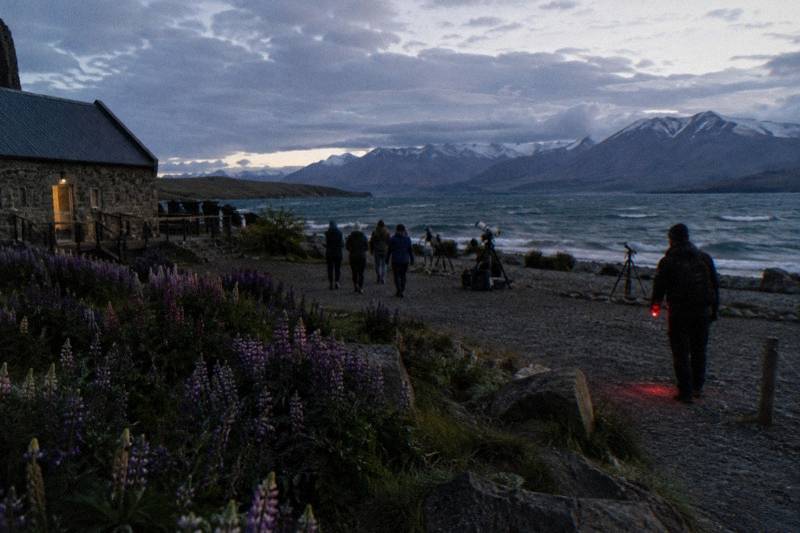
1 hour 30 minutes · Free cancellation
Start with the youngest person in your group. A child aged 5 to 9 rules out the Summit Experience and Soak in the Stars, both minimum age 10, and leaves the Crater Experience from age 5 or Scope at the Stars from age 6. With everyone aged 10 or over, all four headline nights open up, and the choice becomes venue and budget.
Venue is the real decision. Mt John stargazing at the summit means a bus ride to the observatory, telescopes up to 16 inch in a private dome and a 100 m gravel incline walk in the dark. The crater observatory is five minutes from the base, sheltered from wind and light, and 75 minutes door to door.
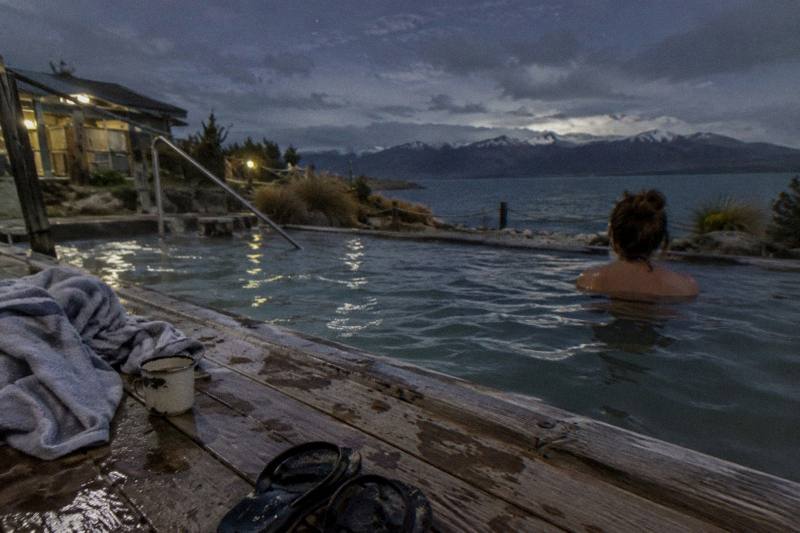
The hot pool night trades aperture for warmth: guided viewing, then a soak at 37.5 to 38.5 °C with towels, robes and poncho coats supplied. Lakeside small-group tours and options beyond Tekapo, in Twizel, at Mt Cook or at Lake Pukaki, spread the choice further across the Mackenzie Basin.
The picker above asks three questions: preferred venue, youngest child's age and price band. Answer those and the shortlist usually falls to one or two listings. Then use Check availability, because dates, not descriptions, decide what is actually bookable on your night.
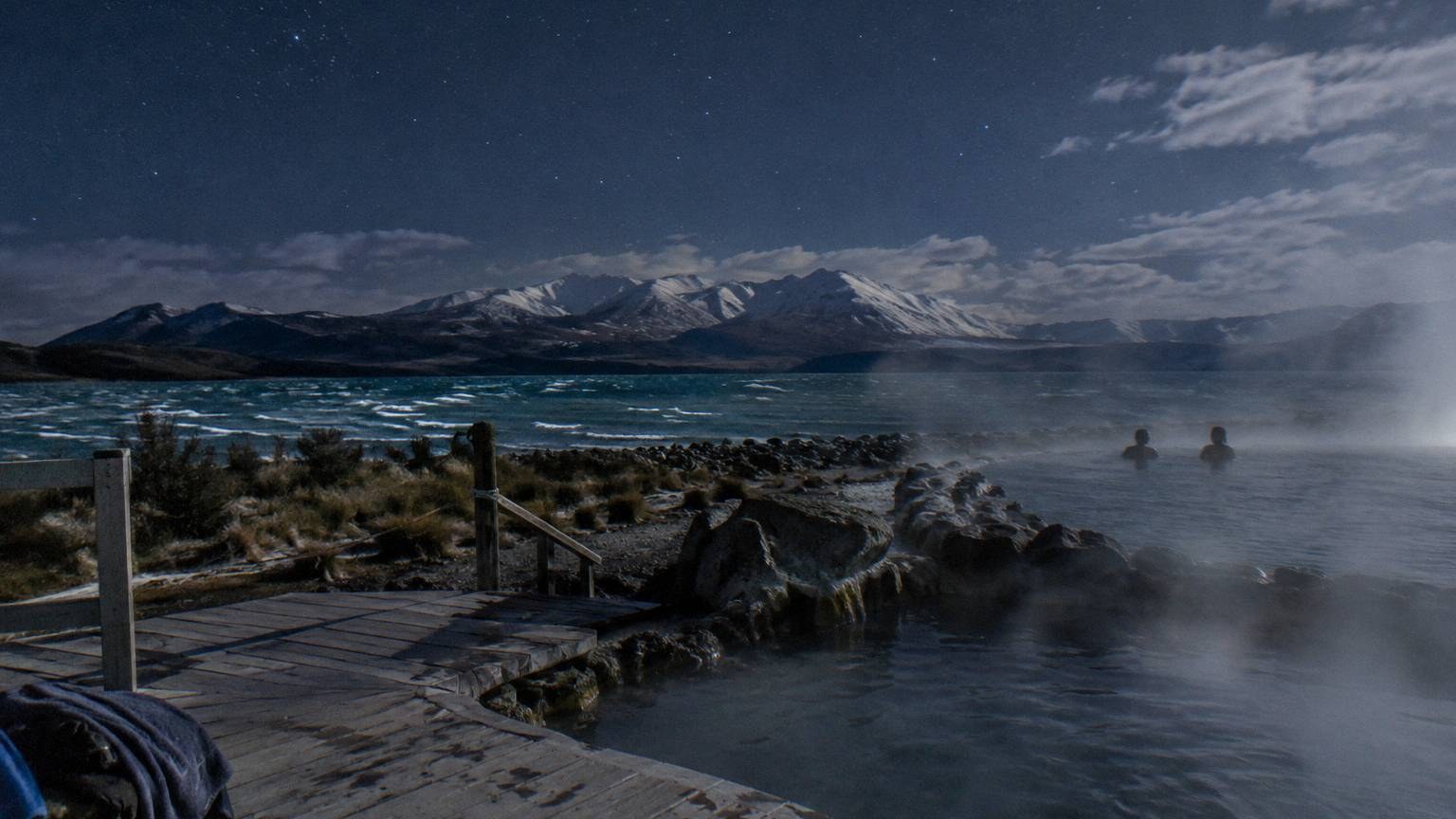
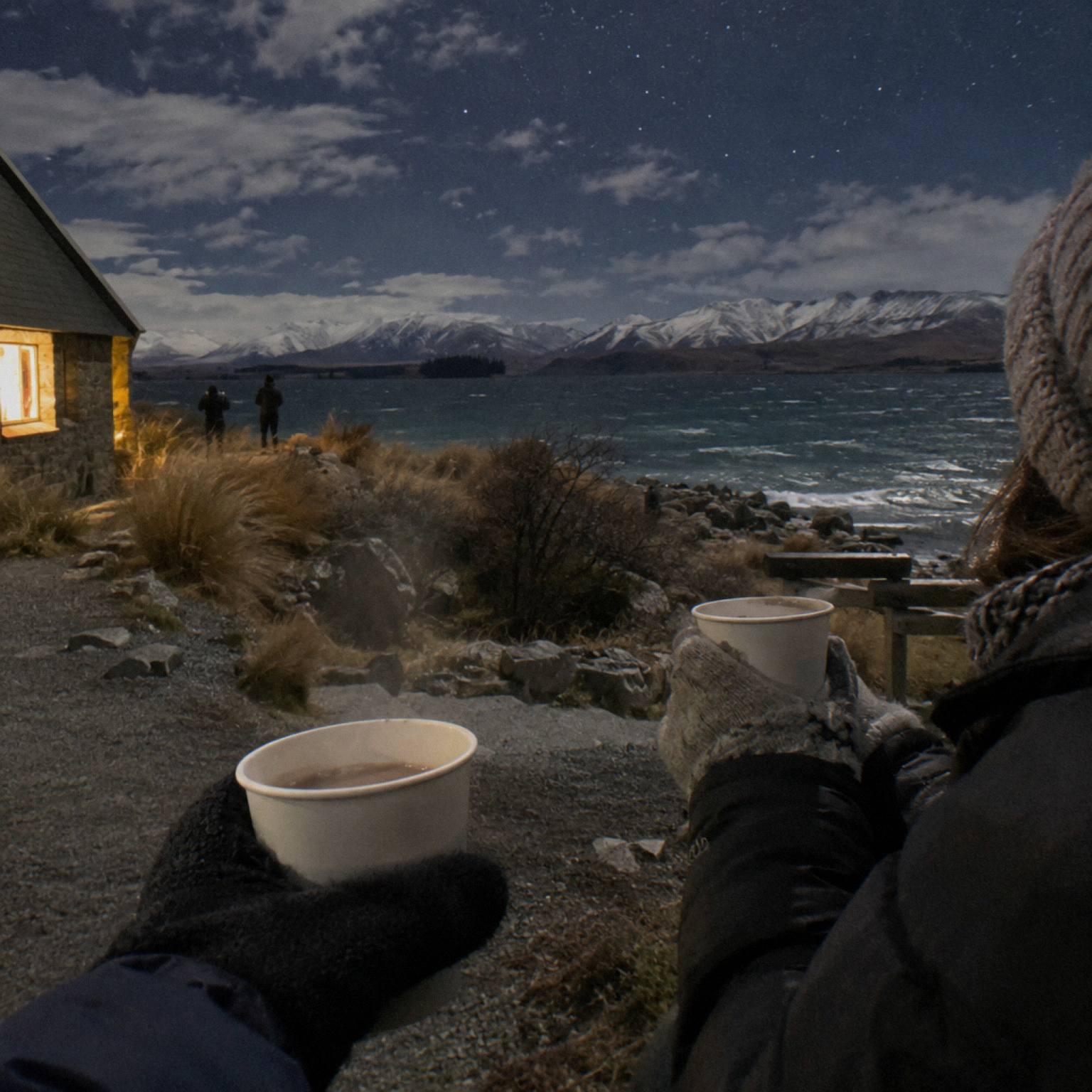
By each operator's own conditions, the Summit Experience suits visitors 10 and over who can manage a 100 m gravel incline walk and a few steps in the dark; the operator lends an Extreme Cold Weather jacket, and dressing for cold beyond that is on you. The Crater Experience takes ages 5 and up, and wheelchair users can join if they drive their own vehicle to Cowan's, which makes it the stated access option among the Dark Sky Project nights.
At Tekapo Springs, Soak in the Stars sets minimum age 10 and Scope at the Stars minimum age 6, while no child under 6 may join any Tekapo Springs tour, including babies carried. The Dark Sky Experience does not publish a minimum age at all, runs indoors in daytime and is unaffected by weather, with under 5s free and content suited to about age 7 and up.
Further afield, the Twizel astronomer-led tour takes ages 6 and over, and Mt Cook stargazing from Silver River runs 75 minutes from the Tasman Glacier car park. Beyond age and venue, little separates them on stated facts: durations run from 45 minutes indoors to 90 minutes on the soak, and every outdoor night depends on conditions no operator can promise.
Mt John rises to 1,029 metres above Lake Tekapo, and the summit belongs to the University of Canterbury Mt John Observatory. It opened in 1965 and is described by the university as New Zealand's largest professional research observatory. Four research telescopes work here: the 1 m McLellan, a 0.6 m Optical Craftsmen, a 0.6 m Boller and Chivens, and the 1.8 m MOA. None of these is a tour instrument. They exist for research, which is the quiet point of a Mt John stargazing night: visitors stand inside a working observatory precinct, not a purpose-built tourist attraction.
The Dark Sky Project Summit Experience runs its own private observatory dome on the summit, fitted with telescopes from 9 1/4 to 16 inch aperture, the company's home page states. Between looks through the eyepiece, a guide works the naked-eye sky with handheld lasers, pairing Tātai Aroraki, Māori astronomy, with Western astronomy. Transport to the summit and back is a 15-minute bus ride, and the whole visit runs 1 hour 45 minutes.
| Where | Aperture As Stated | On A Tour? |
|---|---|---|
| Summit Experience domes | Up to 16 inch | Yes, Dark Sky Project |
| Crater Experience, Cowan's observatory | 14 inch | Yes, Dark Sky Project |
| Silver River tours | 14 inch and 16 inch | Yes, listing read |
| Astro Tekapo lakefront | 9.25 inch | Yes, listing read |
| Chameleon shared stargazing | 9.25 inch | Yes, listing read |
| University of Canterbury McLellan | 1 m | No, research telescope |
| University of Canterbury MOA | 1.8 m | No, research telescope |
| University of Canterbury Optical Craftsmen | 0.6 m | No, research telescope |
| University of Canterbury Boller and Chivens | 0.6 m | No, research telescope |
The chart above draws every aperture to scale, converting inch figures at 25.4 mm to the inch. The comparison is instructive. A 16 inch tour telescope is a substantial window on the sky, yet the research MOA at 1.8 m has about 4.4 times its diameter and nearly 20 times its light-gathering area. Aperture is the honest measure of what a telescope can collect: more opening, more photons, more reach. It is not a promise of what any given night will show, because cloud, moonlight and atmospheric conditions decide that, and no operator guarantees any object.
The scale also puts the tour market in perspective. The Summit domes top the tour table at up to 16 inch, Cowan's runs 14 inch, and the smaller independent tours cluster around 9.25 inch. Those differences are real but modest between neighbours on the chart; the jump to the university instruments is of another order, which is why they sit at the bottom, marked as research telescopes a visitor will not look through on a Mt John stargazing tour.
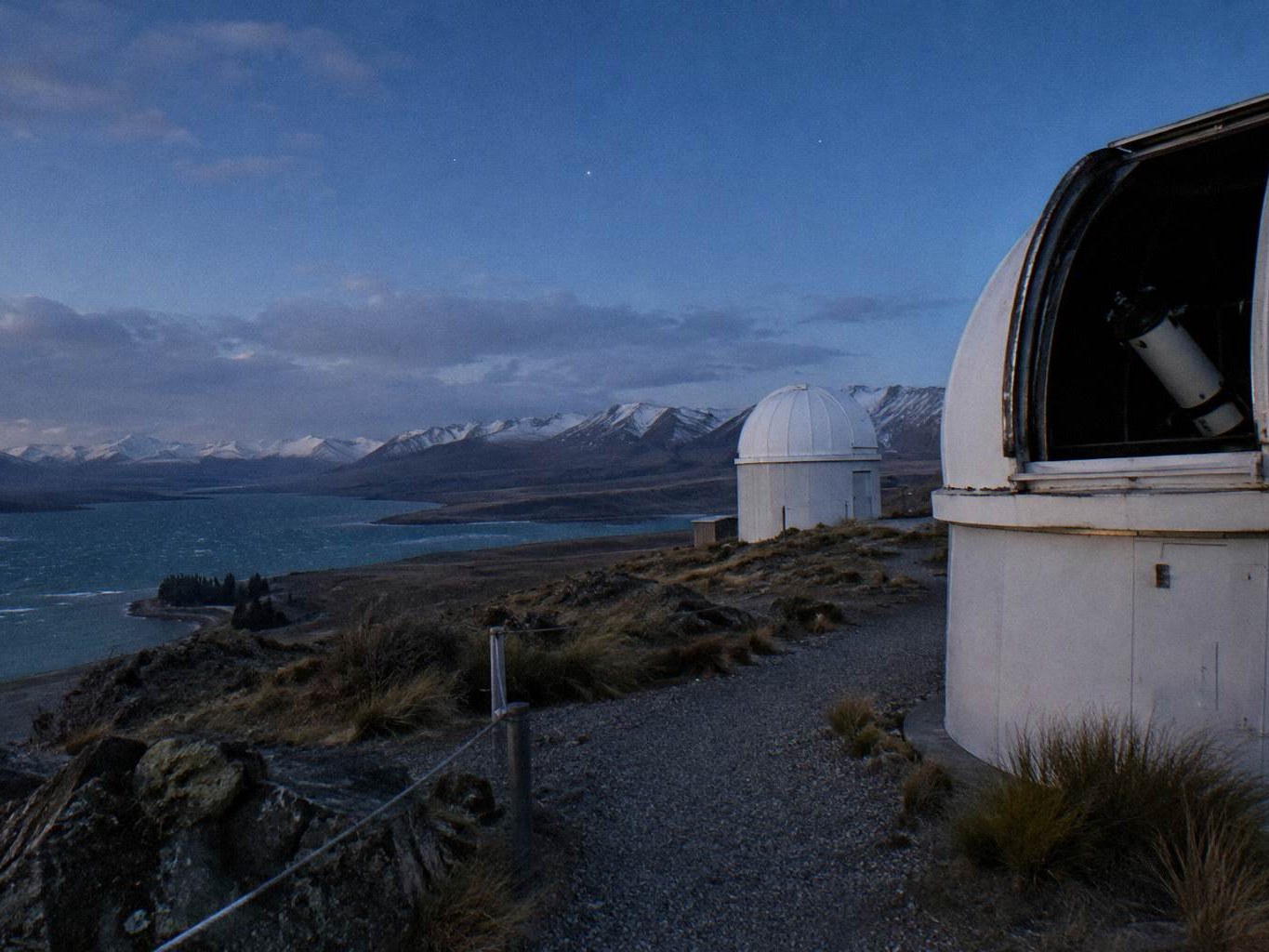
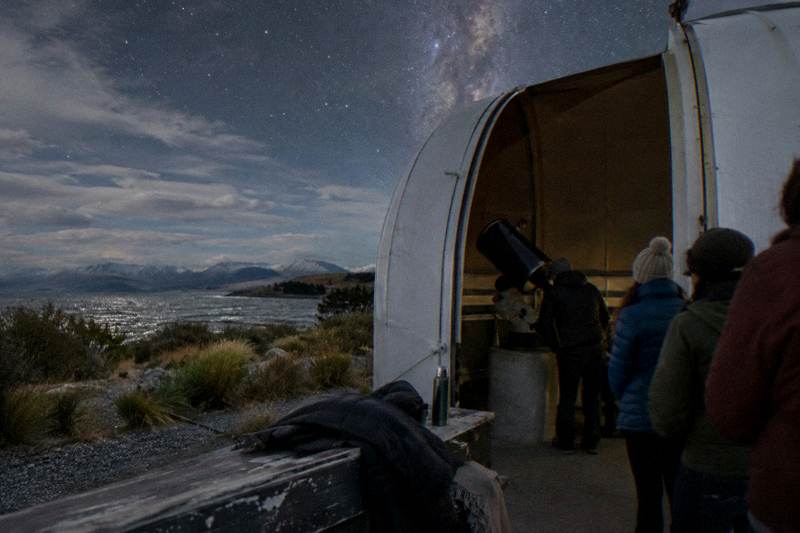
Not every Mt John stargazing option uses the summit. The Dark Sky Project Crater Experience works from Cowan's Private Observatory, a five-minute drive from the lakefront base, where purpose-built observation craters give shelter from wind and stray light. The instruments there run from 9 1/4 to 14 inch, the operator states, and the night runs 75 minutes including transport. Wheelchair users can join, driving their own vehicle to Cowan's.
The independent operators spread wider still. Silver River lists 14 inch and 16 inch telescopes on its alpine and ultimate tours. Astro Tekapo works the lakefront at Takapō Regional Park with a 9.25 inch instrument, per its listing. The numbers matter less than they seem: doubling aperture gathers four times the light, so a 16 inch scope outperforms a 9.25 inch one meaningfully but not categorically. What a viewer actually sees on any night depends on conditions the operator cannot control.
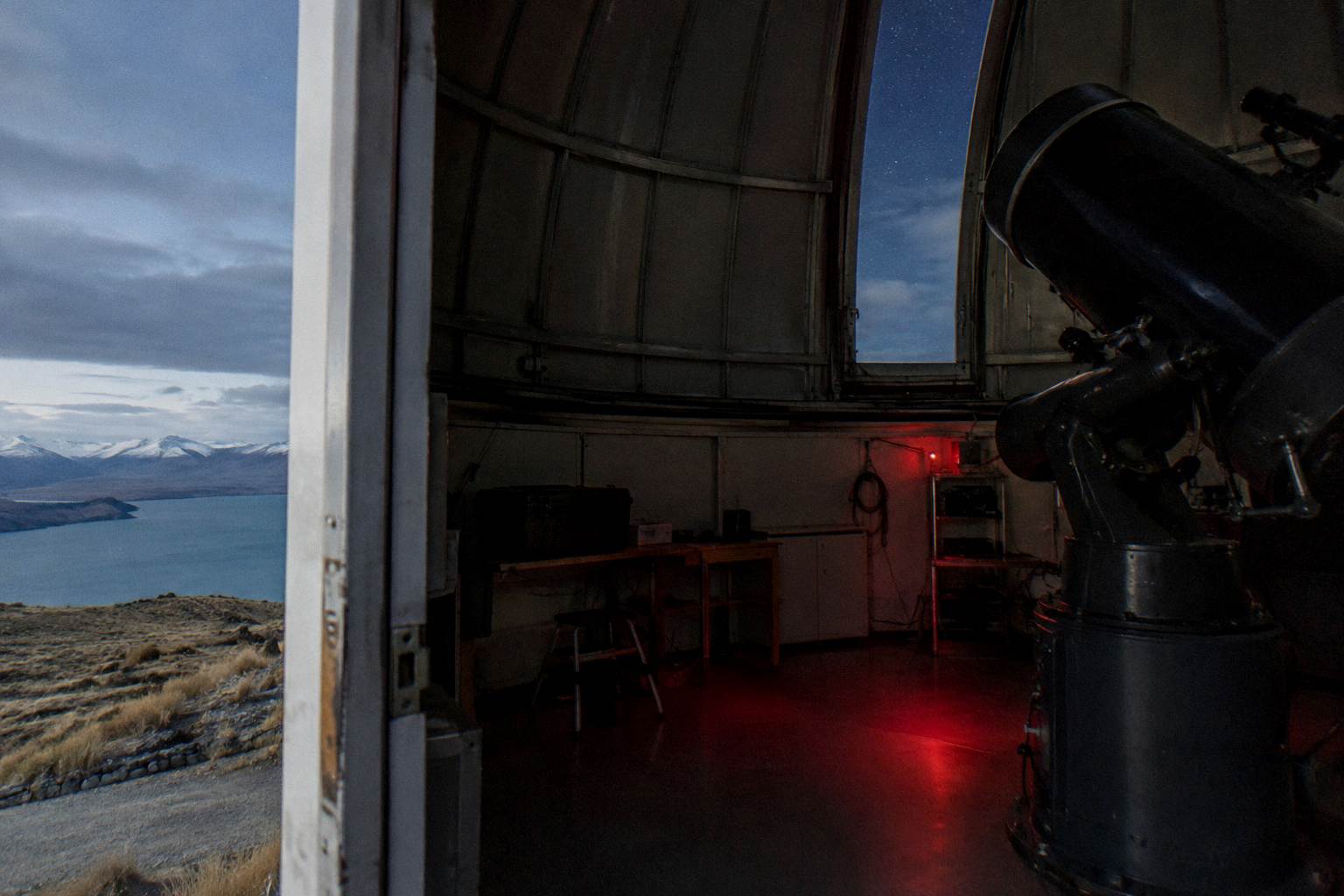
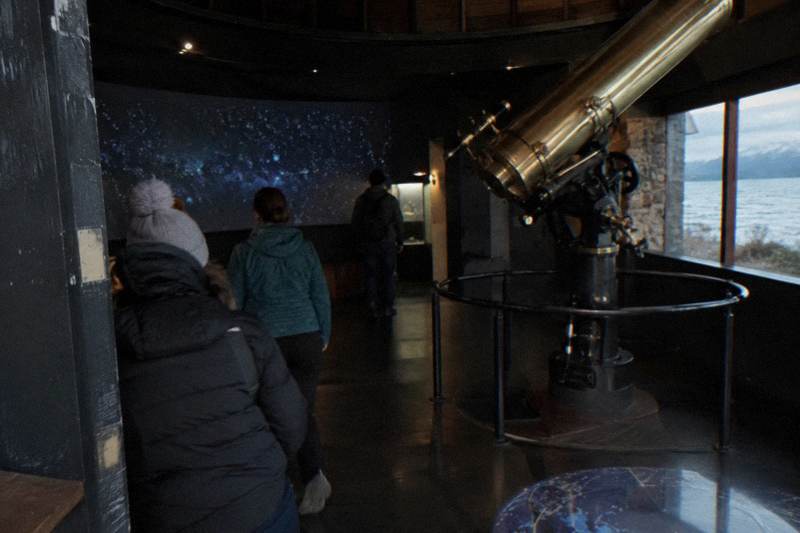
One telescope in Tekapo predates every instrument above. The Dark Sky Experience, a 45-minute indoor guided tour at the Dark Sky Project base, centres partly on the restored 125-year-old Brashear telescope. It is a heritage piece, and the tour is explicit that no stargazing takes place: the visit runs through four zones of Māori and Western astronomy in daylight, at fixed session times, which makes it the one Mt John stargazing family product that weather cannot touch. Adult admission is NZD 59 and the operator lists family pricing too.
An inch figure, then, tells you how much light an instrument can gather, nothing more. It does not say whether the Milky Way will glow over the basin or whether cloud will close the night, and no tour operator in Tekapo will promise either. The honest reading of the scale chart is comparative: which domes have the widest openings, and which telescopes belong to the university rather than to a ticket.
The sky over Tekapo changes with the southern seasons, and the tabs above break it down month by month. Some fixtures hold all year. The Southern Cross, Crux, is circumpolar from Tekapo's latitude, visible every clear night alongside the Pointers, Alpha and Beta Centauri, which lead the eye to it. The Large and Small Magellanic Clouds, two satellite galaxies of the Milky Way, are likewise circumpolar here, hanging in the southern sky whenever conditions allow.
Summer, December to February, brings Orion into the north-western evening sky. From New Zealand it appears upside down relative to Northern Hemisphere views, its belt reading as a saucepan with Rigel on the handle side.
Winter is the deep-sky season. From June to August the galactic centre of the Milky Way, in Sagittarius and Scorpius, stands highest and brightest in the evening sky. Scorpius dominates winter evenings and rides overhead late in the season, Antares burning as its heart. This is the window for the glowing core arching over the Mackenzie Basin, though moonlight dims fainter stars and galaxies, and no operator guarantees the view.
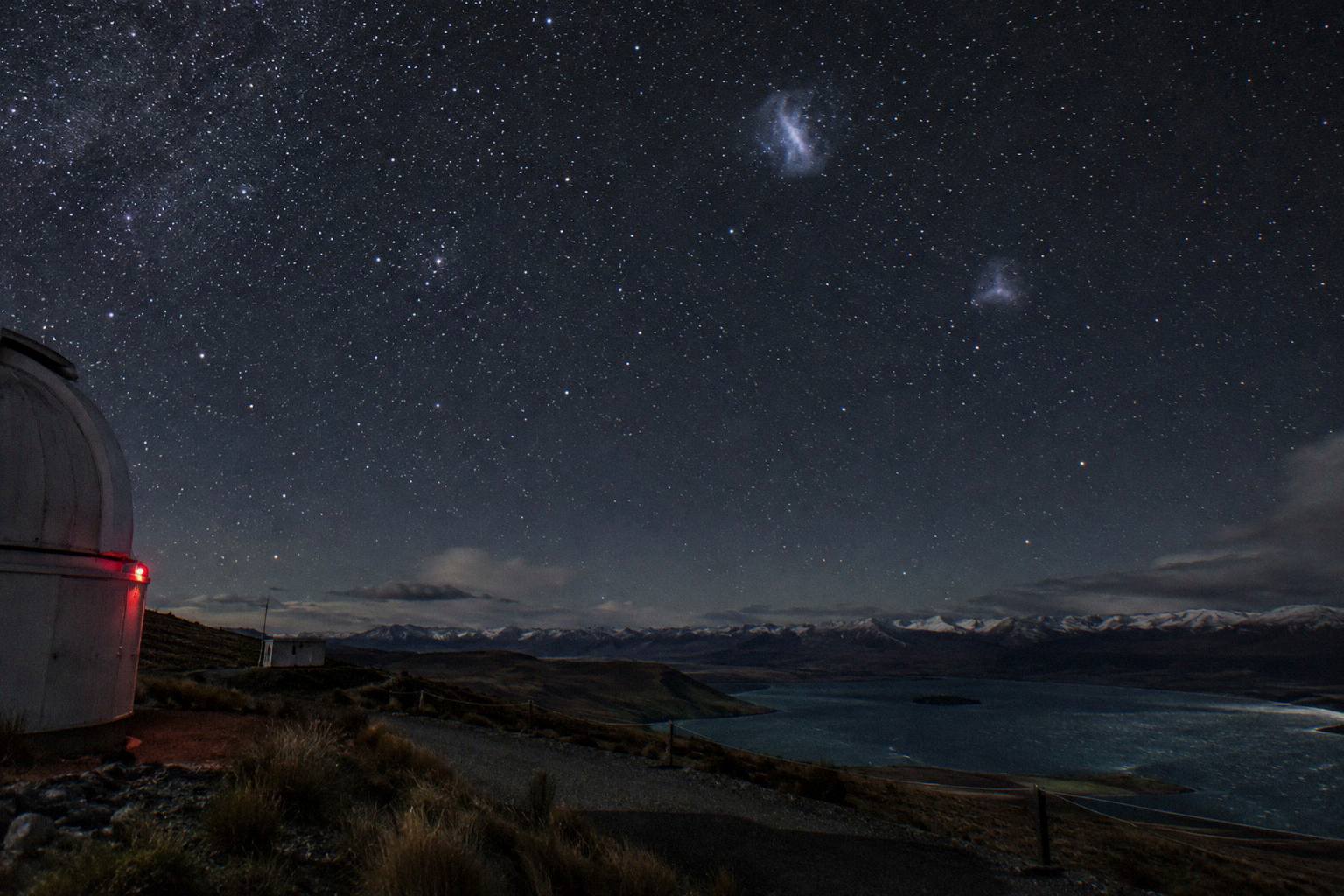
Spring carries the tail of the core season, with early spring among the final months for the bright central region in the evening, while the Magellanic Clouds show well in late spring evenings. The seasonal rhythm matters more in Tekapo than almost anywhere, because the Aoraki Mackenzie International Dark Sky Reserve, awarded in April 2012, protects what these tours sell: the largest Dark Sky Reserve in the Southern Hemisphere, spanning Aoraki/Mt Cook National Park and the Mackenzie Basin. Whichever season you book, the Check availability button shows current dates, and the operator confirms times around sunset.
One event in the Tekapo calendar belongs to both astronomy and te ao Māori. Matariki, the Pleiades cluster, rises before dawn in late June or early July, marking the start of the Māori New Year, Te Tau Hou Māori, for many iwi. The timing is precise enough that stargazing tours in Tekapo treat the rising as a season of its own, and Tekapo Stargazing names Matariki among the star stories its guides tell poolside and at the eyepiece.
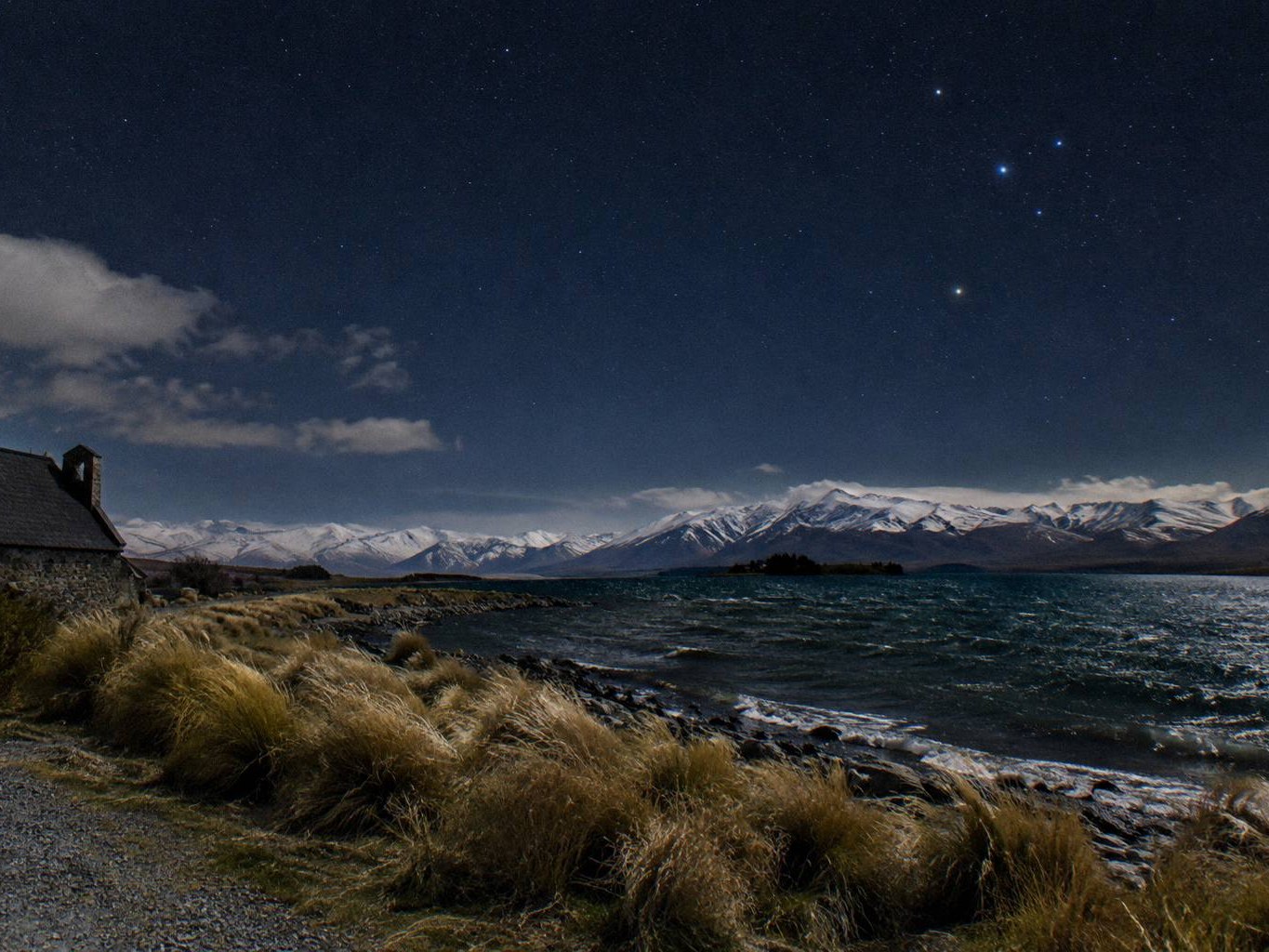
Through southern spring, September to November, the sky transitions. The bright central region of the Milky Way approaches its final evening appearances, while the Southern Cross and the Pointers keep their year-round circumpolar post and the Magellanic Clouds return to good evening visibility late in the season. Every claim about what is overhead comes with the same caveat: the operator decides near tour time whether the sky cooperates.
Aurora australis is the most asked-about and least promisable sight in the Mackenzie Basin. Displays over Lake Tekapo are occasional, occurring when solar activity and conditions align, and they are unpredictable. No tour operator here guarantees the aurora, the Milky Way, or any single object, and the district's own weather tables above set out exactly what happens instead: indoor alternatives, reschedules, vouchers or refunds depending on the operator. Book the night for the sky you can plan around, the seasonal tabs above, and treat anything solar as a bonus the operator will never have promised you.
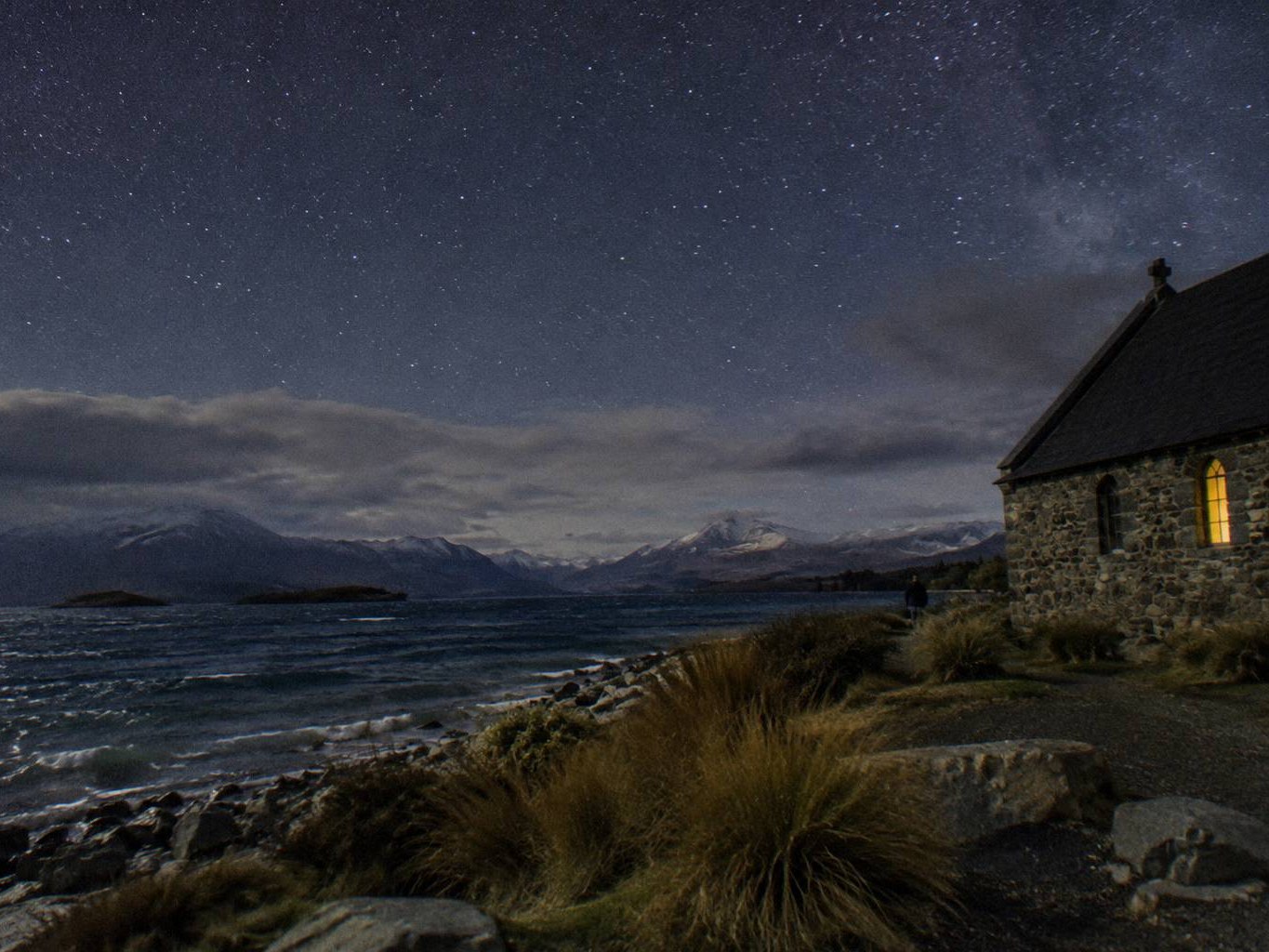
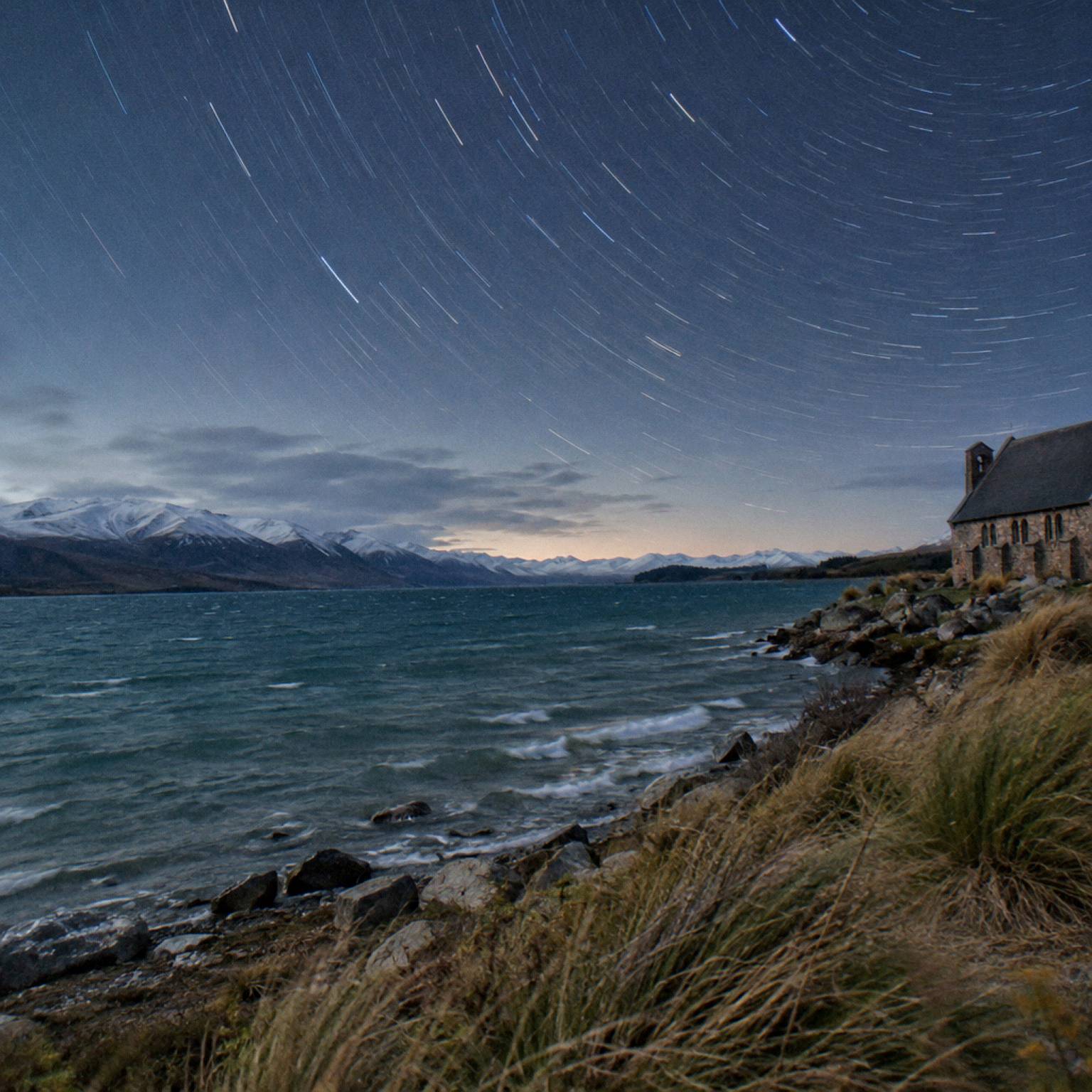
The Dark Sky Project states that Tātai Aroraki, Māori astronomy, is woven through all three of its experiences: the Summit night on Mt John, the Crater session at Cowan's and the indoor Dark Sky Experience. On the summit, guides present Tātai Aroraki alongside Western astronomy while lasers trace constellations for the naked eye. The pairing is deliberate rather than decorative: the same sky read two ways, on the mountain where the University of Canterbury runs its research telescopes.
The company explains its own naming on its website. It writes Takapō, with the macron, as the Ngāi Tahu name for the lake and township, a name recorded by Ngāi Tahu ancestors and carried on the Ka Huru Manu, the iwi's cultural mapping project. Dark Sky Project says it uses Takapō to support the revitalising of Māori place names. Elsewhere around the lake, operators such as Tekapo Springs write the place name without the macron; this page follows the operator whose words are being reported.
Dark Sky Project presents one proverb at the heart of its storytelling: "Nā te pō, ko te ao, ko te ao mārama." The company quotes it in te reo Māori in its own materials. This page does not go beyond what the operator states about the proverb's meaning; it records that DSP places it in its storytelling, alongside the Tātai Aroraki content its guides deliver.
What a visitor takes from this is attribution. The star lore on a Mt John stargazing tour is presented as Ngāi Tahu knowledge shared through a Ngāi Tahu Tourism partner, founded in 2004 and operating from the Rehua building on Motuariki Lane since 2019. It is the framework the operator says structures the whole evening.
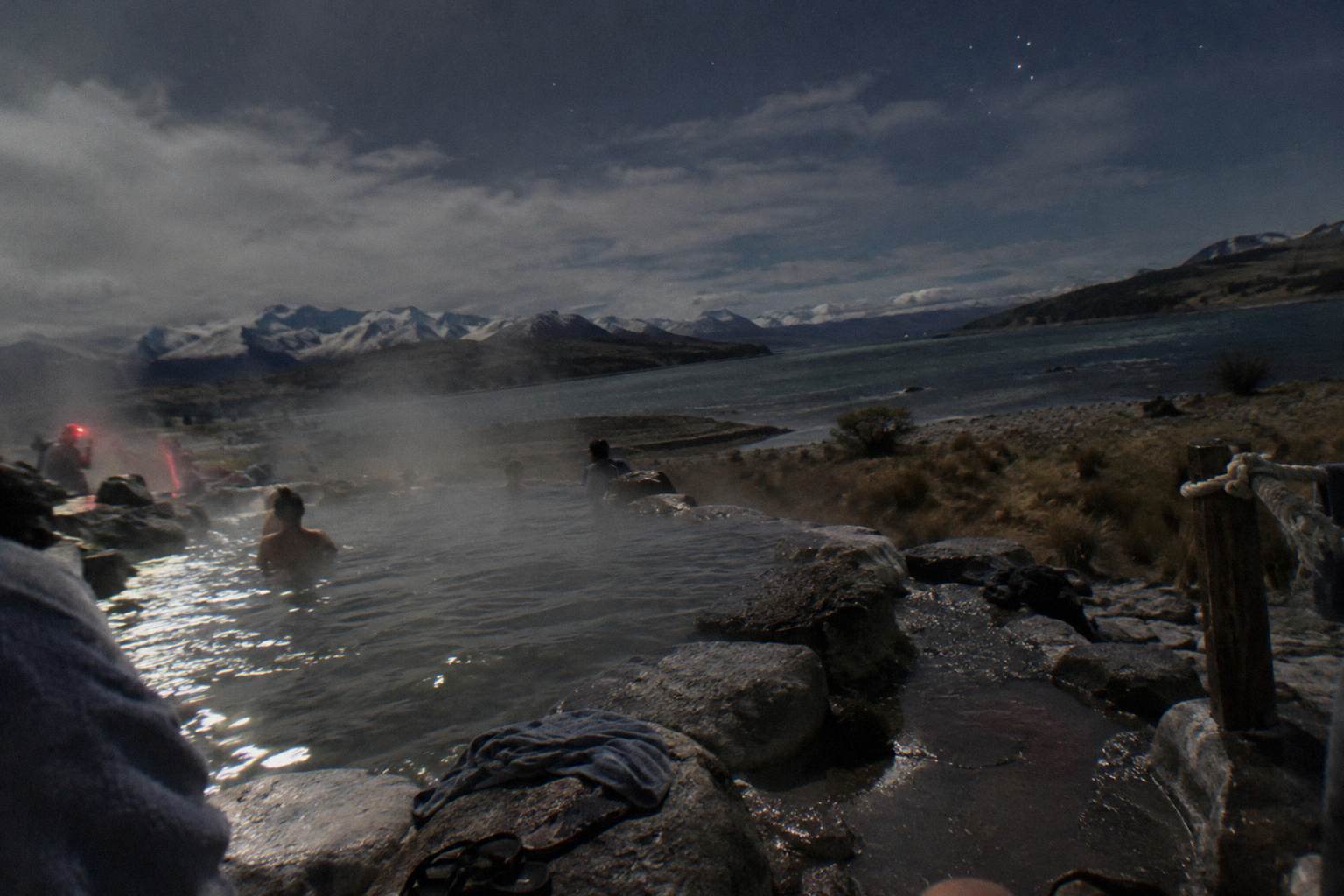
Across town, Tekapo Stargazing presents its own Māori astronomy content. The operator states its guides tell Māori star stories, describe the stars as a Pacific navigation compass used across the ocean, and point out Matariki and the Southern Cross among the sights of the session. On the Soak in the Stars tour this unfolds with the guide poolside at a hot pool of 37.5 to 38.5 °C; on Scope at the Stars, at the telescope. The company attributes this material as Māori star lore presented by its guides, and this page reports nothing beyond what the operator itself states.
Between them, the two houses cover the basin. Dark Sky Project, a Ngāi Tahu Tourism partner, teaches Tātai Aroraki on the summit, at Cowan's and indoors, framing the sky through Ngāi Tahu tradition. Tekapo Stargazing folds Māori star stories, navigation and Matariki into its lakefront sessions. Both run the same sky above the same reserve, and both situate Western astronomy alongside the Māori tradition rather than in place of it.
The practical difference for a visitor is setting and depth. A Mt John stargazing night with Dark Sky Project pairs the lore with the summit dome and laser-guided naked-eye touring, 1 hour 45 minutes on the mountain. Tekapo Springs keeps it shorter and warmer, 60 to 90 minutes with robes and poncho coats supplied.
Neither company's Māori content is summarised or interpreted here beyond its own words, and no stories, ancestors or meanings have been added from outside what the operators publish. Choose by the experience you want the stories told around: a dome at 1,029 metres or a hot pool at lake level.
No operator at Tekapo can guarantee clear skies, the Milky Way or the aurora, and Dark Sky Project is direct about it. The company makes its weather decision as close to tour time as possible, and asks guests to check in 15 minutes early so the guide can pass on the update in person. That means a booking is never confirmed or cancelled long in advance; the summit night is judged on the sky the Mackenzie Basin actually delivers.
If the outdoor stargazing cannot go ahead, guests are offered choices rather than a flat cancellation. Dark Sky Project can switch the group to an indoor alternative, its Virtual Stargazing Experience, or offer a reschedule subject to availability, a gift voucher valid for 3 years, or a full refund. The Summit and Crater tours both sit under this policy, which removes most of the gamble from booking a Mt John stargazing night in a mountain climate.
On direct bookings, Dark Sky Project gives a full refund on cancellations made up to 24 hours before the tour. Inside that 24-hour window the full price is charged, and late check-in is not refunded at all, so the 15-minute-early rule matters for more than the weather update. Groups of 10 or more face tighter terms: no refunds inside 72 hours for the Summit and Crater tours, and inside 48 hours for the indoor Dark Sky Experience.
Bookings made through a third-party agent follow the agent's terms rather than the operator's, a distinction worth checking on the listing before you pay. The weather table above sets out the same rules row by row, alongside what each operator says about the moon. Nothing in the policy promises what you will see; it promises what happens when the sky does not cooperate, which at 1,029 metres is the more useful guarantee.
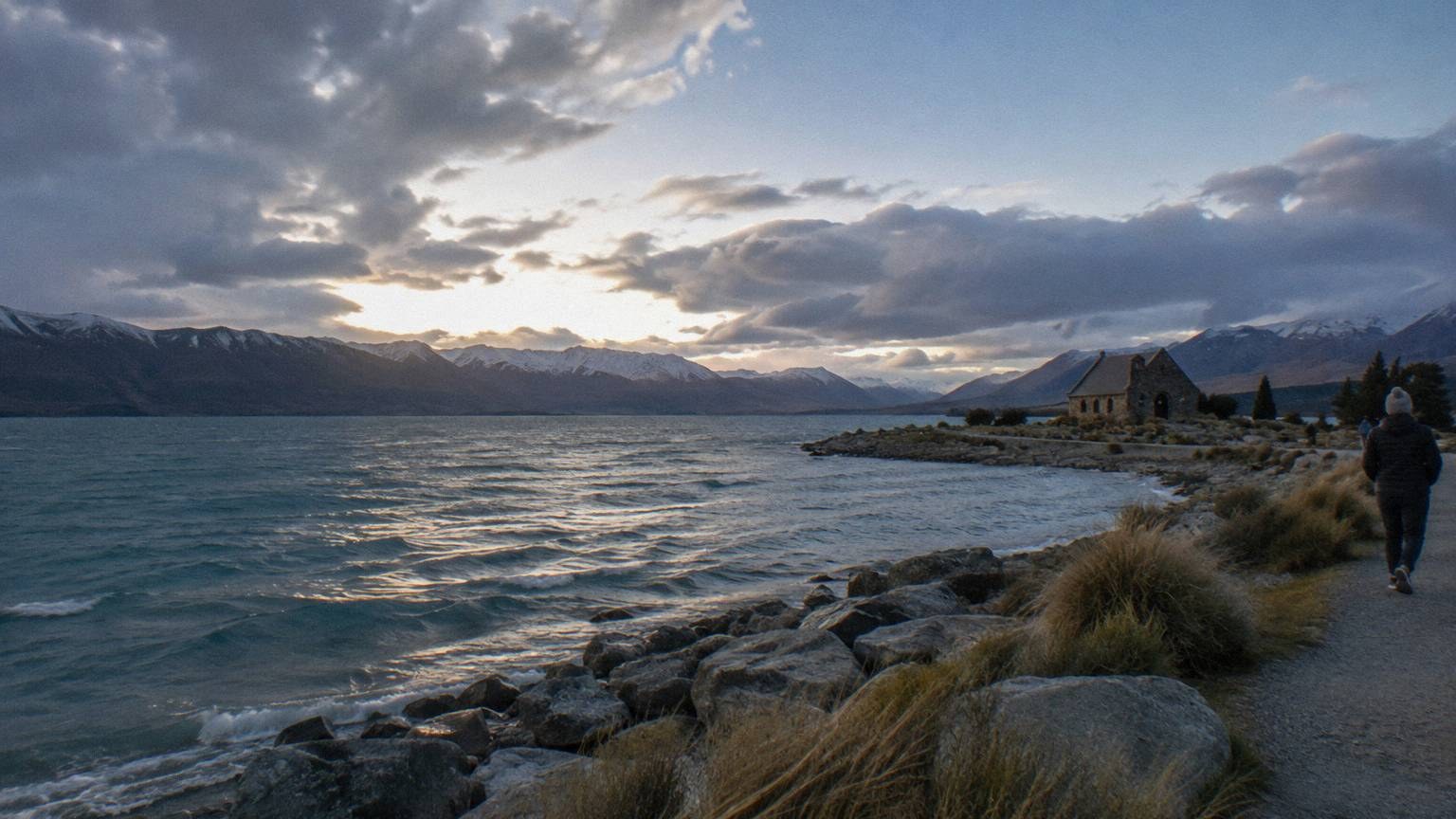
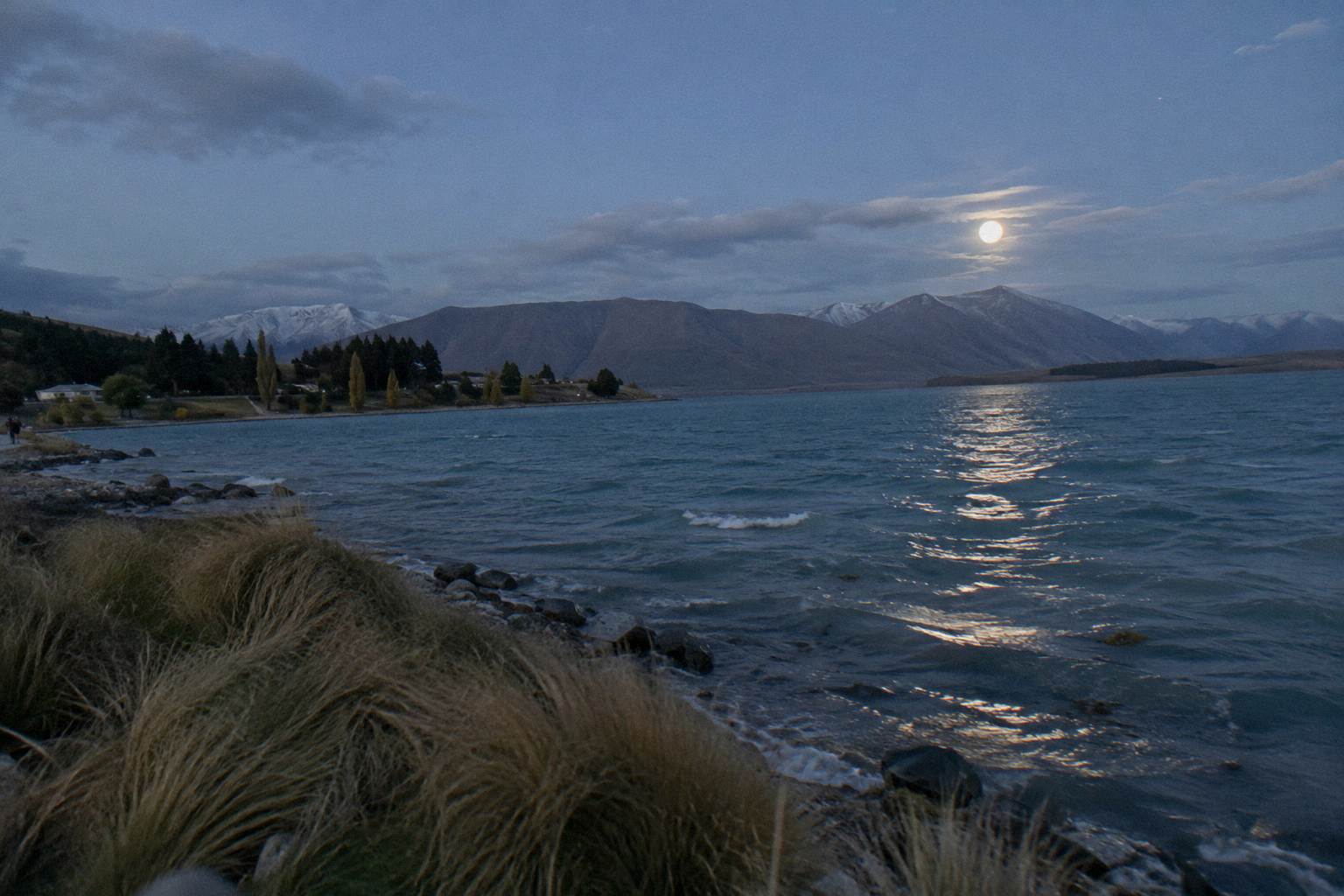
Tekapo Springs takes the opposite approach to cloud: its stargazing tours run in all conditions. When the sky is closed, a VR experience replaces the telescope viewing rather than the tour itself, built around 360 degree imagery that includes the Church of the Good Shepherd and the Mt John summit. It is not a standalone product, only a substitute for the outdoor portion.
There is a partial refund mechanism as well. If a tour delivers under 30 minutes of telescope viewing, Tekapo Springs refunds 25% per ticket at the end of the night, for tours from 18 June 2026. Economy, Premium and Premium Plus tickets are excluded from that refund. Cancellation is otherwise straightforward: change or cancel up to 24 hours before for a full refund, a date change or a voucher, though bookings made before 18 June 2026 or through third-party agents may differ.
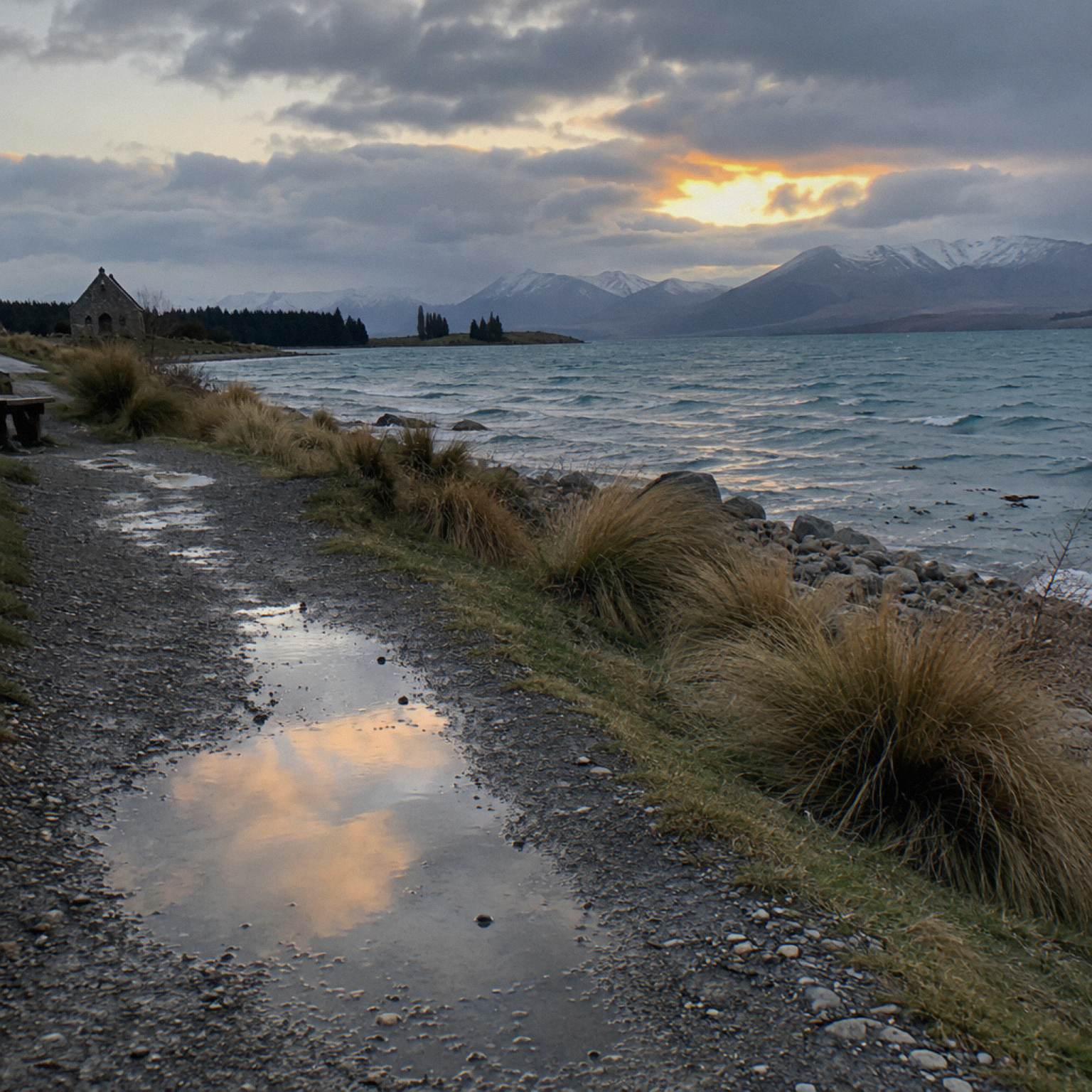
The two operators describe the moon in almost the same terms. Dark Sky Project says brighter moonlight hides fainter stars and galaxies, while pointing out that the moon is itself a good target. Tekapo Stargazing says its telescopes still show bright objects and that a full moon only dims the naked-eye Milky Way. Either way, a moonlit night is not a wasted night; it shifts what you see from faint deep-sky detail to brighter targets.
Booking through a platform rather than the operator changes one thing: the platform's cancellation terms apply, not the direct-booking windows quoted here. Check the listing's terms before relying on a 24-hour rule. Between the VR fallback, the 25% refund band and the reschedule options across both operators, the weather risk at Tekapo is mostly a question of what you will see rather than what you will pay.
Loading the map. Every place is also listed below.
Map tiles and place names: © OpenStreetMap contributors
Every Dark Sky Project experience departs from one place: the Rehua base at 1 Motuariki Lane, Takapō, on the lakefront between the Four Square and the YHA. The building is easy to spot, with a large observatory dome on it. The Summit Experience, the Crater Experience and the indoor Dark Sky Experience all start here, and all three ask guests to check in 15 minutes before departure. That margin is when the guides pass on the weather call, so it is not an optional buffer.
From the base, the Summit tour runs a 15-minute bus ride up to the University of Canterbury Mt John Observatory, while the Crater tour transfers about 5 minutes to Cowan's Private Observatory. The meeting-points table above lists every venue in one view, including check-in times as each operator states them.
| Meets At | Check-In | |
|---|---|---|
| Summit, Crater and Dark Sky Experience (Dark Sky Project) | 1 Motuariki Lane, Takapō, on the lakefront between the Four Square and the YHA | 15 minutes before |
| Tekapo Springs (Soak and Scope) | Tekapo Springs reception, 300 Lakeside Drive, Lake Tekapo | 15 minutes before |
| Astro Tekapo | Lakefront, Takapō Regional Park (listing read, single source) | Per the listing |
| Twizel Stargaze Mackenzie | Twizel; exact start confirmed with the booking | Per the listing |
| Mt Cook Stargazing | Tasman Glacier car park, Aoraki/Mount Cook (listing read, single source) | Per the listing |
| Chameleon and Silver River Alpine and Ultimate | Not stated in the listing reads; sent with the booking | Per the booking |
Tekapo Springs runs its stargazing from a different corner of the village. Soak in the Stars and Scope at the Stars both check in at the Tekapo Springs reception, 300 Lakeside Drive, Lake Tekapo 7945, again 15 minutes before the start. After check-in the soak tour moves between the telescope viewing and the hot pools on site, so there is no separate departure point to find in the dark.
Two check-in addresses therefore cover the four main tours in the village, both on the lakefront. Wheelchair users joining the Crater Experience have a different arrangement: they drive their own vehicle to Cowan's rather than taking the transfer. A complimentary hotel shuttle from Tekapo Springs is subject to availability and can be requested at booking, which is worth doing if you are staying further from the lake.
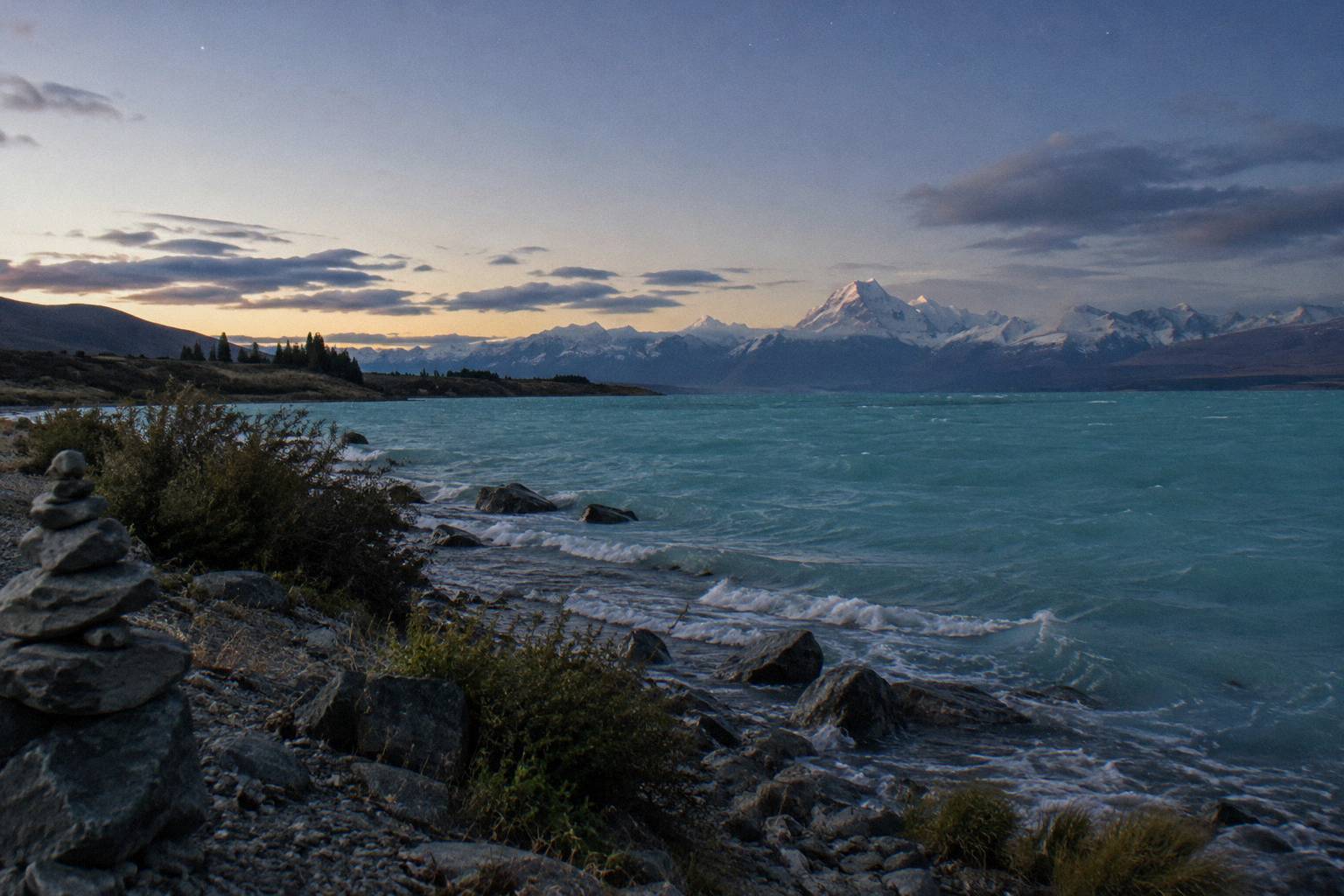
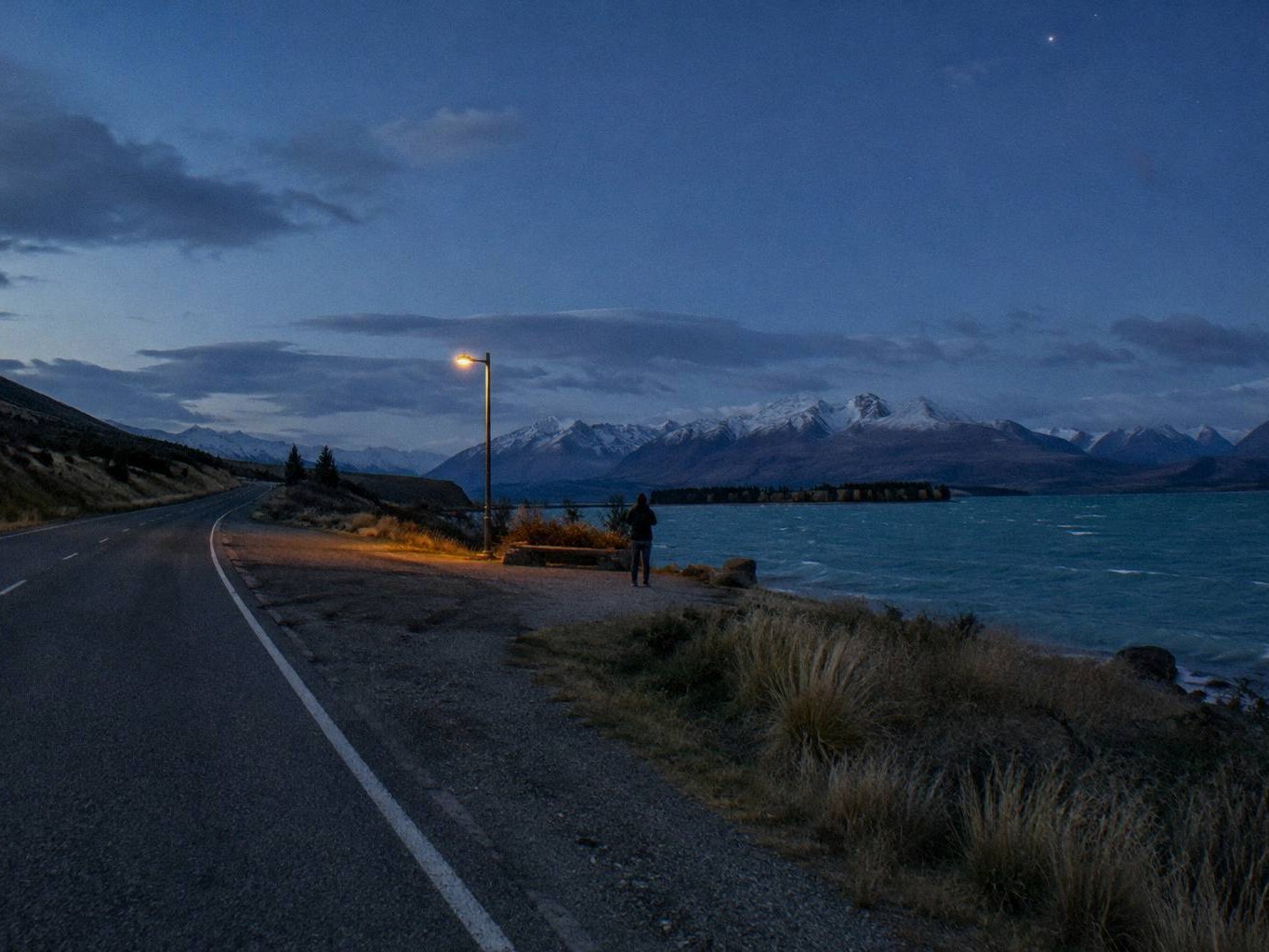
Not every tour on this site meets in Tekapo. Stargaze Mackenzie runs an astronomer-led tour from Twizel, about half an hour's drive north of the village, with the exact start confirmed with the booking. Silver River Stargazing operates a Mt Cook tour that meets at the Tasman Glacier car park in Aoraki/Mount Cook, according to a single listing read, alongside its Alpine and Ultimate products from the Mackenzie Basin, whose meeting points are sent with the booking.
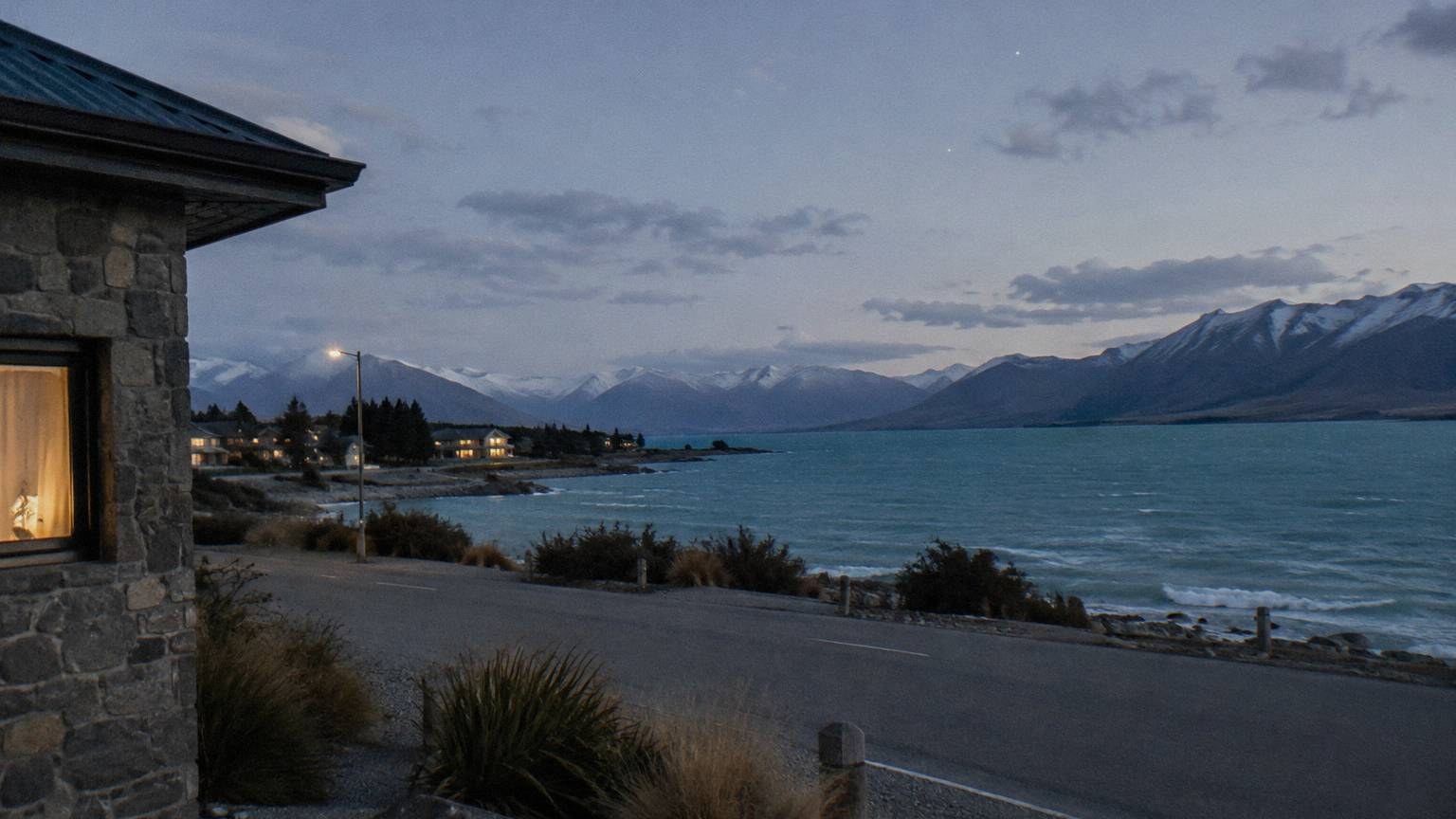
Closer to town, Astro Tekapo meets on the lakefront at Takapō Regional Park, a single-source read, and Chameleon Stargazing sends its shared-tour meeting point with the booking confirmation. For all of these, the listing is the source of truth once you book, and the table above records which addresses are operator-confirmed and which come from listing reads.
Takapō is about three hours' drive from both Queenstown and Christchurch, which makes a Mt John stargazing night realistic as a stop on a South Island itinerary rather than a detour. For context only, Big Sky Stargazing also operates from the Hermitage at Aoraki/Mount Cook Village, the operator describes it as the only stargazing tour in the national park, but it is not bookable on this site and no link or recommendation is given here. The ten tours listed above are the ones with availability buttons on this page.
| Minimum Age | What Is Included | Good To Know | |
|---|---|---|---|
| Summit Experience | 10 | Transport, guide, telescopes in a private dome, Extreme Cold Weather jacket on loan | 100 m gravel incline walk and a few steps in the dark |
| Crater Experience | 5 | Transport, guide, 14 inch telescopes or the observatory dome | Wheelchair users can join but drive their own vehicle to Cowan's |
| Dark Sky Experience (indoor) | No minimum | 45-minute indoor guided astronomy tour in four zones | Content suits about age 7 and up; under 5 free |
| Soak In The Stars | 10 | Guided telescope viewing, hot pool at 37.5 to 38.5 °C, towels, robes, hot drinks, poncho coats | No child under 6 on any Tekapo Springs tour |
| Scope At The Stars | 6 | About 50 minutes of telescope viewing, a daytime hot pools pass for the same or next day | Runs 7 evenings a week October to April |
| Astro Tekapo | 6 | 9.25 inch telescope, edited photo, moon chair, blanket, hot chocolate (listing read) | Single-source listing read |
The Summit Experience bundles nearly everything into its NZD 239 ticket: transport, guiding, time at telescopes up to 16 inch inside a private observatory dome, and the loan of an Extreme Cold Weather jacket, which Dark Sky Project provides on the Summit tour only. Adult and child pay the same price, and the minimum age is 10. One physical demand sits in the fine print: a 100 m walk up a gravel incline, plus a few steps, taken in the dark.
The Crater Experience covers transport and guiding too, with 14 inch telescopes or the observatory dome at Cowan's Private Observatory, a five-minute drive from the base. At NZD 139 adult and NZD 99 for ages 5 to 17, it is the younger-family option, and wheelchair users can join if they drive their own vehicle to Cowan's.
Tekapo Springs stacks its inclusions differently. Soak in the Stars pairs guided telescope viewing with exclusive use of a hot pool at 37.5 to 38.5 °C, with a guide poolside, and supplies towels, robes, hot drinks and warm poncho coats. Scope at the Stars keeps about 50 minutes of telescope viewing and adds a complimentary daytime hot pools pass for the same or the next day.
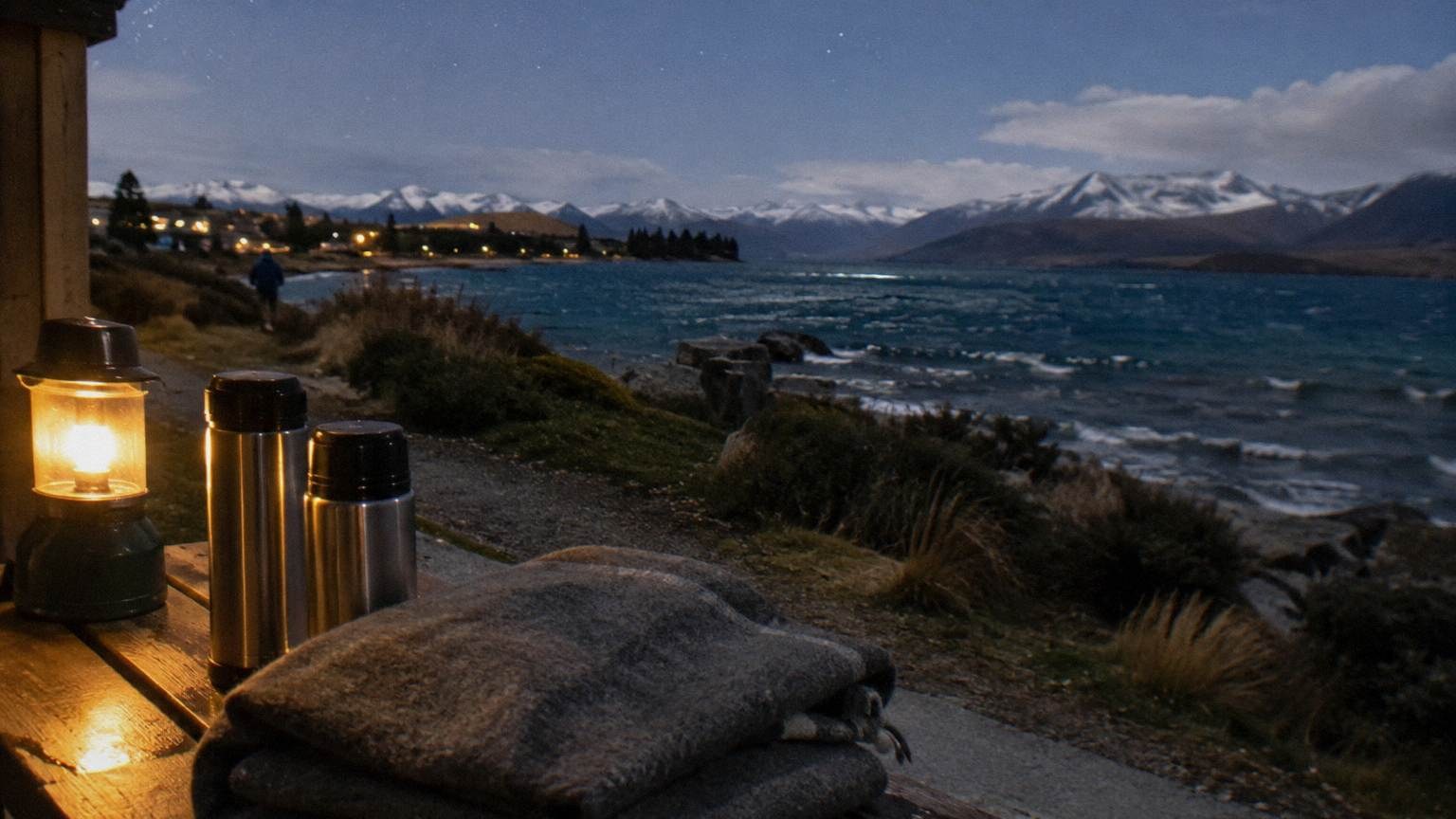
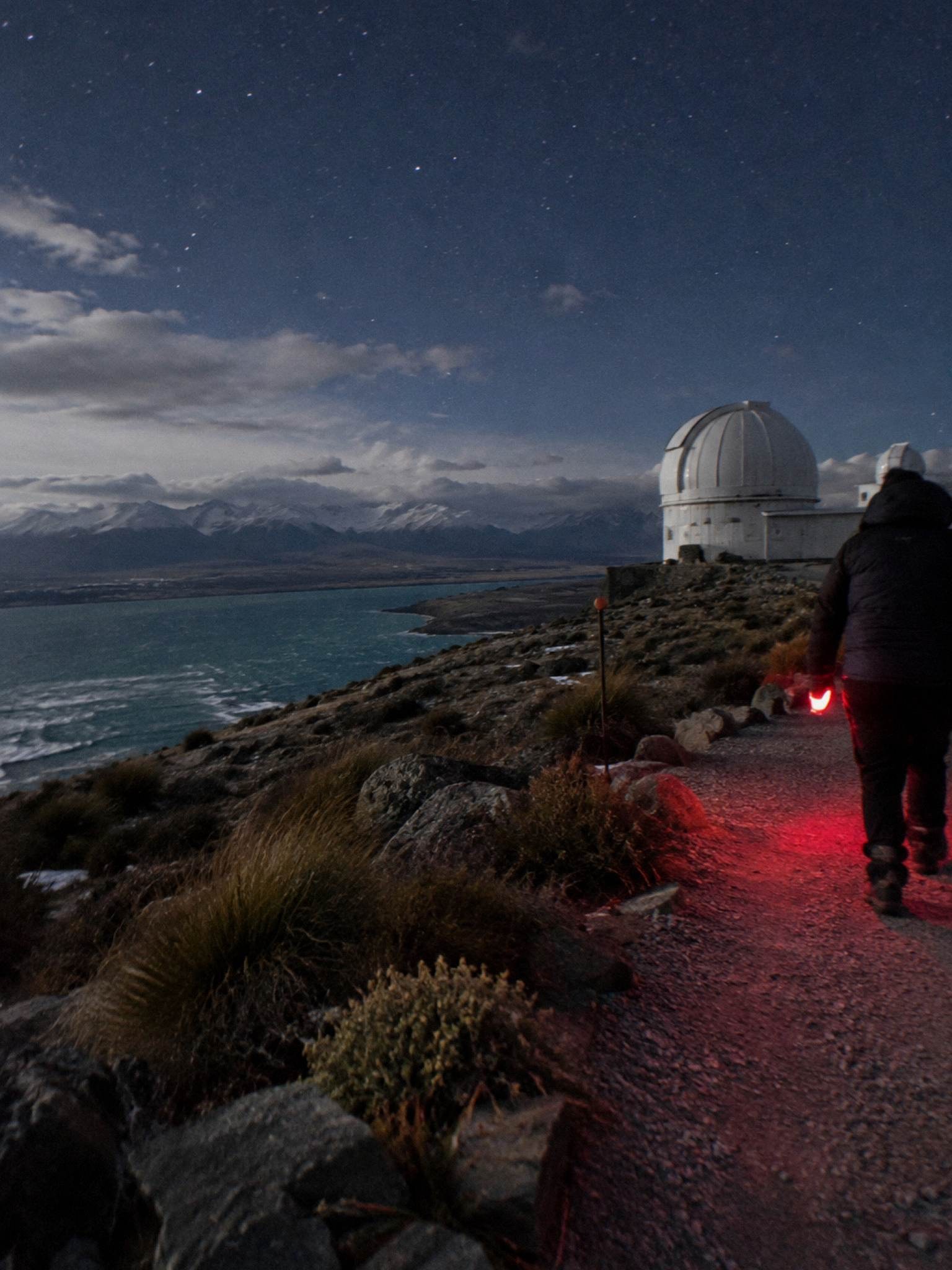
No operator publishes a summit temperature, and none should be assumed. The working rule for Mt John stargazing is simple: dress for cold, because warmth on the hill comes from the borrowed jacket rather than the forecast.
Minimum ages shape the choice more than anything else. The Summit sets 10, Soak in the Stars sets 10, Crater allows ages 5 and up, Scope at the Stars starts at 6, and Tekapo Springs permits no child under 6 on any of its tours, including babies carried. The indoor Dark Sky Experience has no minimum age, with content the operator describes as suiting about 7 and up, and under 5s go free with an adult ticket.
For clothing, the stated advice is to dress for cold. No temperature figure is published for the summit, and the operators' own provisions are the ECW jacket on the Summit and the robes, towels and poncho coats at Tekapo Springs.
Tekapo Springs offers a complimentary hotel shuttle subject to availability, requested at the time of booking. The Astro Cafe sits on the Mt John summit, open daily 9am to 4pm with a NZD 14 per vehicle road user fee at the gate for the daytime access road, and vehicles over 12 seats are not permitted. The Summit Circuit track runs 8.9 km return from there for anyone extending the daytime visit before the night tour.
The Summit night runs to a fixed shape. It starts at the Dark Sky Project base at 1 Motuariki Lane, Takapō, where check-in opens 15 minutes before departure and doubles as the weather update. From there a 15-minute bus ride climbs to the University of Canterbury Mt John Observatory at 1,029 m. On arrival, the Extreme Cold Weather jacket goes on loan.
The viewing splits into two halves. First come the telescopes, up to 16 inch aperture, inside a private observatory dome on the summit. Then the guide turns to the naked-eye sky, tracing it with handheld lasers and reading it two ways at once: Māori astronomy, which Dark Sky Project presents as Tātai Aroraki, alongside Western astronomy. The bus returns everyone to the base. Total length is 1 hour 45 minutes.
Dark Sky Project does not publish Summit departure times because they follow sunset, which shifts through the year; the tour runs 7 days, and the exact time appears with the booking. This is also why the weather call comes late: the operator makes the go-or-alternative decision as close to tour time as possible, and clarity or any particular object cannot be guaranteed.
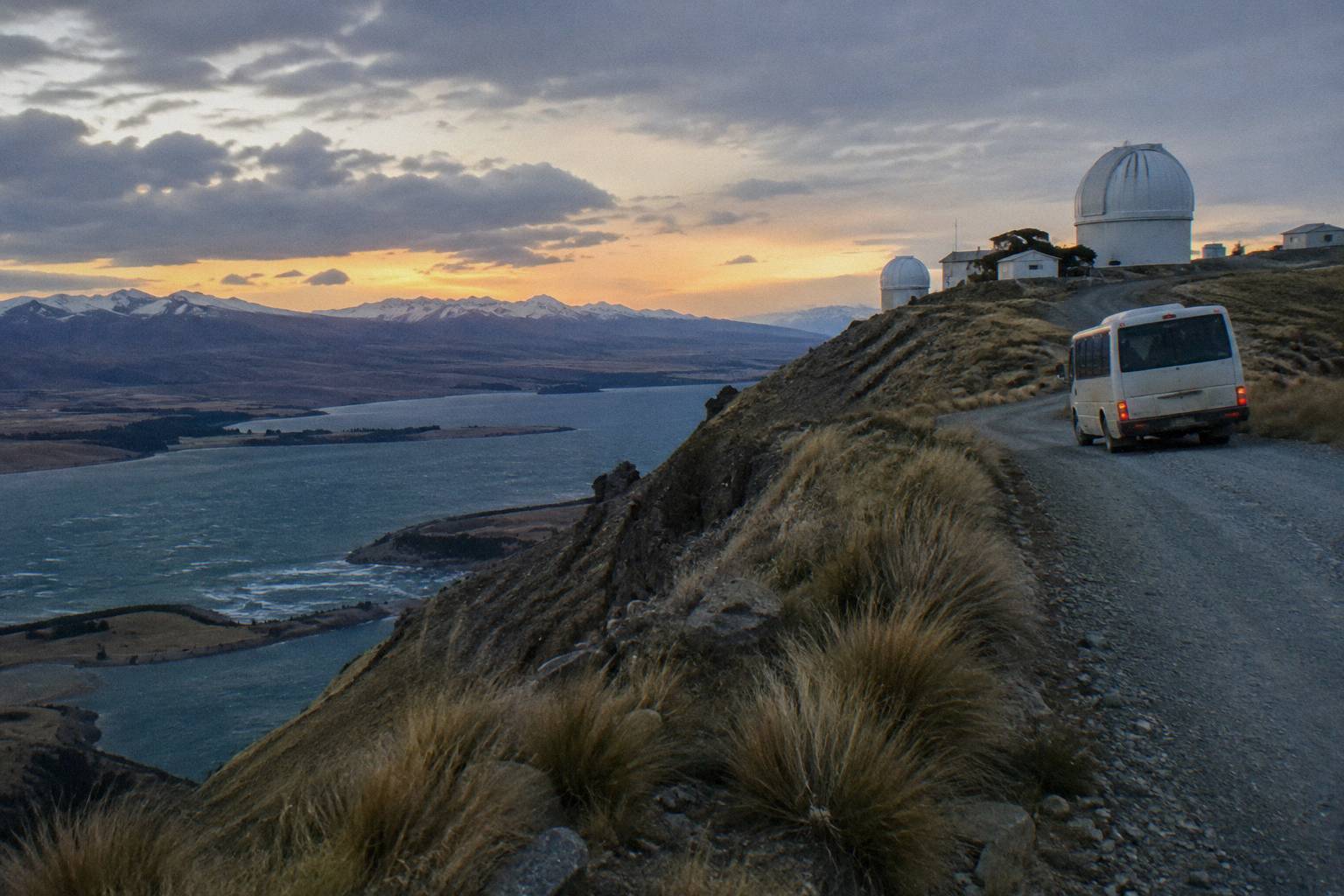
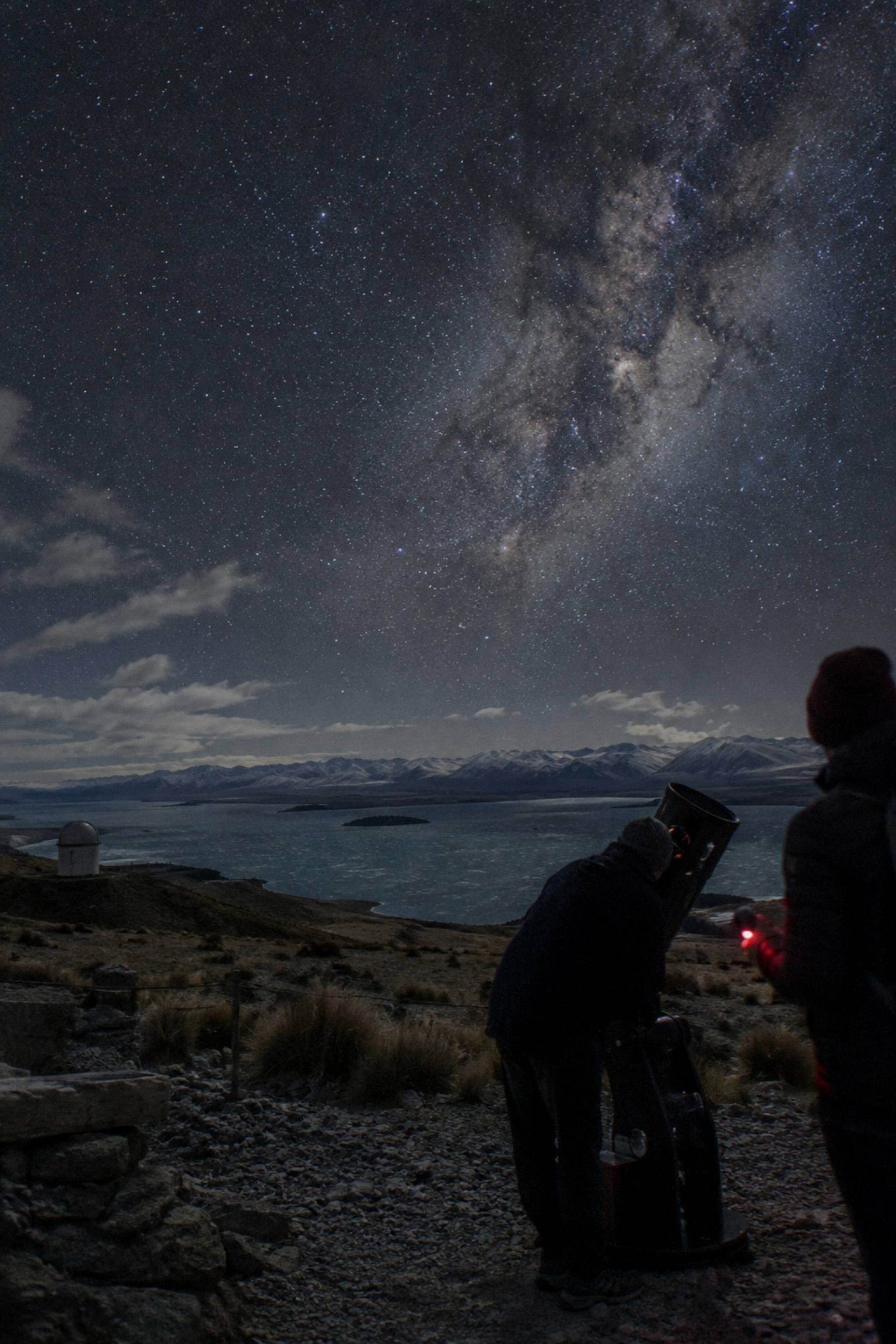
The Crater Experience compresses the same operator into 75 minutes including transport. Check in at the base 15 minutes early, drive five minutes to Cowan's Private Observatory, whose purpose-built observation craters are sheltered from wind and light, then look through the 14 inch telescopes or the observatory dome before returning. Tours run evenings after twilight, 7 days a week, with Tātai Aroraki woven through the guiding here as well.
Tekapo Stargazing reverses the order: guided telescope viewing first, then an exclusive hot pool at 37.5 to 38.5 °C with a guide poolside, all within 90 minutes. Start times are seasonal, and some tours begin after midnight. Soak in the Stars runs 7 evenings a week from October to April and Thursday to Monday from May to September.
Daytime has its own option. The Dark Sky Experience is a 45-minute indoor guided astronomy tour at the base, moving through four zones and taking in the restored 125-year-old Brashear telescope. English tours run at 10:30am, 12:30pm and 2:30pm, with 4:30pm added on Tuesday and Wednesday, subject to availability. Mandarin is available on request. There is no stargazing in it, which is precisely its value when the sky is closed.
| Experience | Operator Adult From-Price | Listing Rating |
|---|---|---|
| Mt John Summit Stargazing | NZD 239 | 4.6 from 352 reviews |
| Cowan's Observatory, Transport Included | NZD 139 | 4.6 from 93 reviews |
| Dark Sky Experience, Indoor | NZD 59 | 4.6 from 54 reviews |
| Hot Pools And Stargazing, 90 Minutes | NZD 179 | Reviews on the listing |
| Chameleon Shared Stargazing | Not stated | Reviews on the listing |
| Lakefront Stargazing, 1.5 Hours | Not stated | Reviews on the listing |
| Silver River Alpine, 75 Minutes | NZD 119 | Reviews on the listing |
| Silver River Ultimate, 2 Hours | Not stated | Reviews on the listing |
| Astronomer-Led Twizel Stargazing | NZD 119 | Reviews on the listing |
| Mt Cook Stargazing, 75 Minutes | NZD 119 | Reviews on the listing |
The table above reflects the operators' own direct-booking prices, with Dark Sky Project's figures stated as valid to 30 September 2027. In brief: the indoor Dark Sky Experience from NZD 59 adult, Scope at the Stars from NZD 129, the Crater Experience from NZD 139, Soak in the Stars from NZD 179, and the Summit Experience at NZD 239 for adult and child alike.
Three tours carry printable listing ratings, all at 4.6: the Summit from 352 reviews, the Crater from 93, and the Dark Sky Experience from 54. Every other tour on the page shows "Reviews on the listing" because no verified count exists to print, and inventing one is worse than saying nothing.
Prices move with travel dates and differ on booking platforms, so treat each "from" figure as the floor of the operator's own range rather than a promise. The Check availability button on each card returns the live number for the date you select.
Motuariki Lane, Lake Tekapo
Check ratesRapuwai Lane, Lake Tekapo
Check ratesBeauchamp Place, Lake Tekapo
Check ratesLake Tekapo village keeps every major meeting point close together. The Dark Sky Project base sits at 1 Motuariki Lane on the lakefront, between the Four Square and the YHA, and Tekapo Springs sits at 300 Lakeside Drive. Check-in for both is 15 minutes before departure, so a bed in the village removes any late-arrival risk, and late check-in at Dark Sky Project is not refunded.
The cards below show three tiers in Lake Tekapo: a budget option around Motuariki Lane, a mid-range option around Rapuwai Lane, and an upper tier around Beauchamp Place. Takapō is about three hours' drive from both Queenstown and Christchurch, which makes an overnight stay the usual plan for a Mt John stargazing night.
Dark Sky Project lists NZD 239 for adults and NZD 239 for children alike, the same price for every participant aged 10 and over, with pricing valid to 30 September 2027. The figure is the operator's direct-booking price and changes with date. The 1 hour 45 minute Mt John stargazing tour includes transport, guiding, telescope time in a private dome and an Extreme Cold Weather jacket on loan. Family passes are not stated for this tour.
The Crater Experience costs less, from NZD 139 adult and NZD 99 child aged 5 to 17, with a family pass at NZD 377. It runs 75 minutes including a 5-minute drive to Cowan's Private Observatory, which has purpose-built observation craters sheltered from wind and light. The Summit uses telescopes up to 16 inch inside a dome at the observatory, while Crater offers 14 inch telescopes or the observatory dome. Crater also takes children from age 5 and allows wheelchair users who drive their own vehicle to Cowan's.
The Summit Experience sets a minimum age of 10, and children pay the full NZD 239. The Crater Experience takes ages 5 and up. Tekapo Springs requires 10 for Soak in the Stars and 6 for Scope at the Stars, with no child under 6 on any of its tours, including babies carried. The Dark Sky Experience has no minimum age and is free for under 5s with an adult ticket, though its content suits about age 7 and up.
No operator guarantees clear skies. Dark Sky Project makes the call as close to tour time as possible and, if outdoor stargazing is not possible, offers an indoor alternative or the Virtual Stargazing Experience, a reschedule subject to availability, a gift voucher valid 3 years, or a full refund. Tekapo Springs tours run in all weather, with an indoor VR experience replacing telescope viewing; if under 30 minutes of telescope viewing happens, 25% is refunded per ticket.
For direct bookings, Dark Sky Project gives a full refund if cancelled up to 24 hours before; inside 24 hours the full price is charged, and late check-in is not refunded. Groups of 10 or more face tighter windows: 72 hours for Summit and Crater, 48 hours for the Dark Sky Experience. Tekapo Springs allows changes or cancellation up to 24 hours before for a refund, date change or voucher. Bookings through an agent follow that agent's terms.
Aurora Australis is visible from Lake Tekapo and the Mackenzie Basin occasionally, when solar activity and conditions align, but displays are unpredictable and no operator promises them. If a southern lights display happens during a Mt John stargazing tour it is a bonus rather than a booked feature. The same applies to the Milky Way: Dark Sky Project states it depends on conditions.
Not entirely. Dark Sky Project notes brighter moonlight hides fainter stars and galaxies, while the moon itself is a good viewing target. Tekapo Springs says its telescopes still show bright objects under moonlight and a full moon only dims the naked-eye Milky Way. For a Mt John stargazing night focused on faint objects, darker moon conditions help, but tours run regardless.
No temperature figure is published for the summit. The operator lends an Extreme Cold Weather jacket on the Summit tour only, and dressing for cold is advised. Tekapo Springs supplies robes, towels and warm poncho coats for its tours. The summit sits at 1,029 metres, so conditions can be colder than the village.
Dark Sky Project tours reach the summit on the operator's 15-minute bus from the base at 1 Motuariki Lane, so private driving is not part of the tour. The Astro Cafe access road is open 9am to 4pm with a NZD 14 per vehicle road user fee at the gate, and vehicles over 12 seats are not permitted. The cafe itself is a daytime venue.
Soak in the Stars at Tekapo Springs, from NZD 179 adult and NZD 115 child, combines guided telescope viewing with exclusive use of a hot pool at 37.5 to 38.5 °C, with the guide poolside. It lasts 90 minutes, minimum age 10, and includes towels, robes, hot drinks and warm poncho coats. Scope at the Stars adds a complimentary daytime hot pools pass for the same or next day instead of the soak.
Advance booking is the safe approach. The Summit runs 7 days but times follow sunset. Tekapo Springs runs 7 evenings a week October to April and Thursday to Monday May to September, with some tours beginning after midnight. Dark Sky Experience English tours run at 10:30am, 12:30pm and 2:30pm, with 4:30pm added Tuesday and Wednesday, subject to availability.
Summit times are not published: they follow sunset and vary through the year, so exact times appear with the booking. The Crater Experience runs in the evening after twilight, 7 days a week. The only stated fixed times are the Dark Sky Experience English tours at 10:30am, 12:30pm and 2:30pm, plus 4:30pm on Tuesday and Wednesday. Tekapo Springs start times are seasonal and some Mt John stargazing nights begin late.
Yes. Stargaze Mackenzie runs an astronomer-led 75-minute tour from Twizel with a minimum age of 6. Silver River Stargazing operates a 75-minute Mt Cook stargazing tour meeting at the Tasman Glacier car park, plus Alpine and Ultimate options, all within the Mackenzie Basin. Big Sky Stargazing at the Hermitage in Aoraki/Mount Cook Village also exists for context but is not bookable on this site.
Tātai Aroraki is Māori astronomy as Dark Sky Project presents it, woven through the Summit, Crater and Dark Sky Experience tours alongside Western astronomy. The operator connects it to the name Takapō, recorded by Ngāi Tahu ancestors on the Ka Huru Manu map, and quotes the proverb "Nā te pō, ko te ao, ko te ao mārama". Tekapo Stargazing presents Māori star stories, stars as a Pacific navigation compass, Matariki and the Southern Cross.
The Aoraki Mackenzie International Dark Sky Reserve is, as the operators state it, the largest Dark Sky Reserve in the Southern Hemisphere. It was awarded reserve status in April 2012 with gold status and covers Aoraki/Mt Cook National Park and the Mackenzie Basin, which is why Mt John stargazing and tours across Twizel and Mt Cook all sit inside it. The district also has lighting rules that support the dark skies.
 Astro Cafe Mount John
 Astrophotography Tours
 Aurora Forecast Planning
 Best Time To Stargaze
 Christchurch To Tekapo
 Cloud And Cancellations
 Crater Experience
 Dark Sky Project Tours
 Dark Sky Reserve Guide
 Free Stargazing Tekapo
 Group Or Private Stargazing
 How To Book
 Milky Way At Tekapo
 Moon Phase Planning
 Mount Cook Stargazing
 NZ Stargazing Places
 Photography Settings
 Southern Constellations
 Southern Lights
 Springs Stargazing
 Stargazing With Kids
 Summit Experience
 Summit Night Visit
 Summit Or Hot Pools
 Tekapo Forecast
 Tekapo Stargazing Explained
 Tour Duration
 Tour Reviews
 Tours Compared
 Twizel Stargazing
 What To Wear
 What You See
 Where To Stay